

Amoxicillin is a common antibiotic used to treat bacterial infections. Doctors often prescribe the 500mg strength for adult patients. It works by stopping bacteria from growing in your body. This medication treats many different types of illnesses effectively. You might need it for an ear or throat infection. It can also help with skin or urinary issues. Understanding the correct dose is very important for safety. Taking too little may not kill the bacteria. Taking too much can cause unwanted side effects. Always follow the specific instructions from your doctor. They know your health history and current needs.
This guide explains how to use this medicine safely. We will cover typical dosing schedules for adults. You will learn about common conditions it treats. The article discusses side effects you should watch for. We also explain what to do if you miss a dose. Storage tips help keep the medication effective. You will find answers to frequent patient questions. This information helps you manage your treatment well. Remember that this guide does not replace medical advice. Always consult your healthcare provider for personal guidance. Read on to understand amoxicillin 500mg dosage for adults clearly.
Standard Dosing Guidelines for Adults
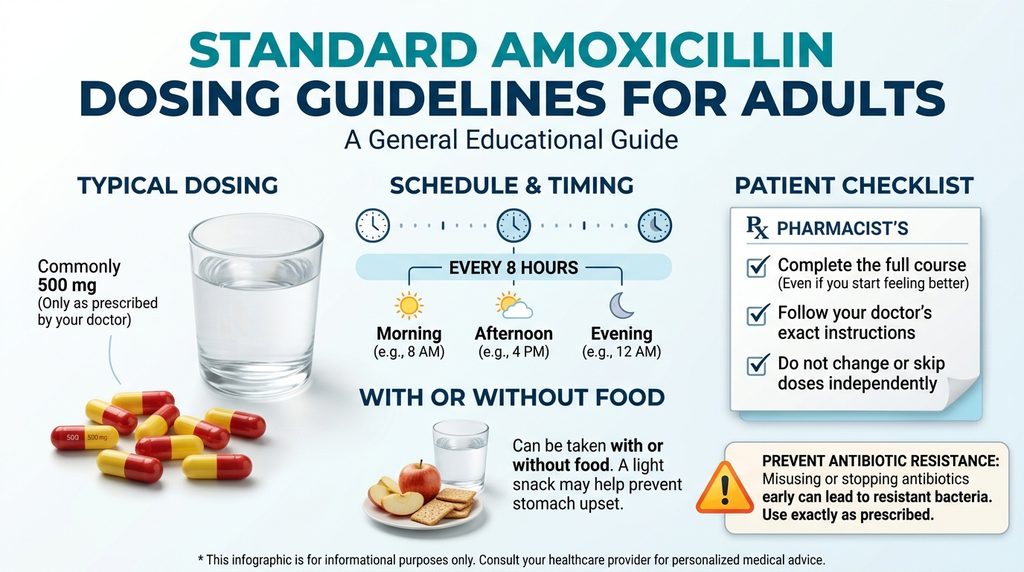
The typical dose for many infections is 500mg. Patients usually take this pill every eight hours. This means three times a day is standard. Some doctors may prescribe it twice a day instead. This depends on the type of infection present. Severe infections might require higher doses initially. Your doctor will decide the best schedule for you. Do not change the frequency without asking them. Consistency helps maintain drug levels in your blood. This keeps the bacteria under control throughout the day. Take the pill with a full glass of water.
You can take amoxicillin with or without food. Food may help reduce stomach upset for some people. If you feel nauseous, try eating a snack first. Swallow the capsule or tablet whole. Do not crush or chew extended-release forms. Check the label to see if yours is special. Finish the entire course of prescribed medication. Stopping early can let the infection return stronger. This creates resistance to antibiotics in the future. Even if you feel better, keep taking the pills. The bacteria may still be present in small numbers. Completing the course ensures they are all eliminated.
Treating Common Infections Effectively
Ear infections often respond well to this antibiotic. Adults may experience pain and pressure in the ear. The usual dose is 500mg every eight hours. Treatment typically lasts for seven to ten days. Sinus infections also require a similar approach. Congestion and facial pain are common symptoms. Your doctor might extend the duration for sinus issues. Chronic cases may need longer treatment periods. Follow up if symptoms do not improve quickly. Additional tests might be necessary for persistent pain.
Strep throat and tonsillitis are bacterial throat issues. Amoxicillin helps reduce swelling and pain rapidly. Patients often feel relief within forty-eight hours. Continue taking the medicine for the full term. This prevents complications like rheumatic fever. Dental infections involve bacteria in the gums or teeth. A tooth abscess may need drainage plus antibiotics. The 500mg dose helps control the spread of infection. It is often used before dental procedures too. This prevents bacteria from entering the bloodstream. Always inform your dentist about any allergies first.
Managing Urinary Tract Issues
Urinary tract infections (UTIs) cause burning and urgency. Amoxicillin is sometimes used for simple UTIs. However, resistance is becoming more common now. Doctors may test urine to check sensitivity first. If the bacteria are susceptible, 500mg works well. The typical course lasts for three to seven days. Drink plenty of water to help flush your system. This supports the antibiotic in clearing the infection. Cranberry juice may offer additional supportive benefits. It does not replace the need for medication though.
Complicated UTIs may require different treatments. Kidney infections are more serious than bladder ones. They often need stronger or intravenous antibiotics. Amoxicillin alone might not be enough here. Your doctor will monitor your kidney function closely. Fever and back pain suggest a deeper issue. Seek immediate care if these symptoms appear. Early treatment prevents permanent damage to organs. Do not ignore mild symptoms hoping they pass. Prompt attention leads to faster recovery and less risk.
Understanding Potential Side Effects
Most people tolerate amoxicillin very well overall. Mild side effects are the most common occurrence. Nausea and vomiting can happen after taking doses. Diarrhea is another frequent complaint among patients. Taking the pill with food often helps reduce this. Yeast infections may occur in women specifically. Antibiotics kill good bacteria along with the bad ones. This imbalance allows yeast to grow excessively. Probiotics might help restore healthy gut flora. Ask your doctor if supplements are right for you.
Serious side effects are rare but possible. Watch for signs of an allergic reaction immediately. Hives, itching, or swelling require urgent attention. Difficulty breathing is a medical emergency call. Stop taking the drug if you see a rash. Some rashes indicate a severe allergy called Stevens-Johnson syndrome. Liver problems can occur in very rare cases. Yellowing of the skin or eyes is a warning. Dark urine and severe fatigue are also signs. Contact your healthcare provider right away if these happen. They will determine if you need to stop the medication.
Important Safety Precautions and Interactions
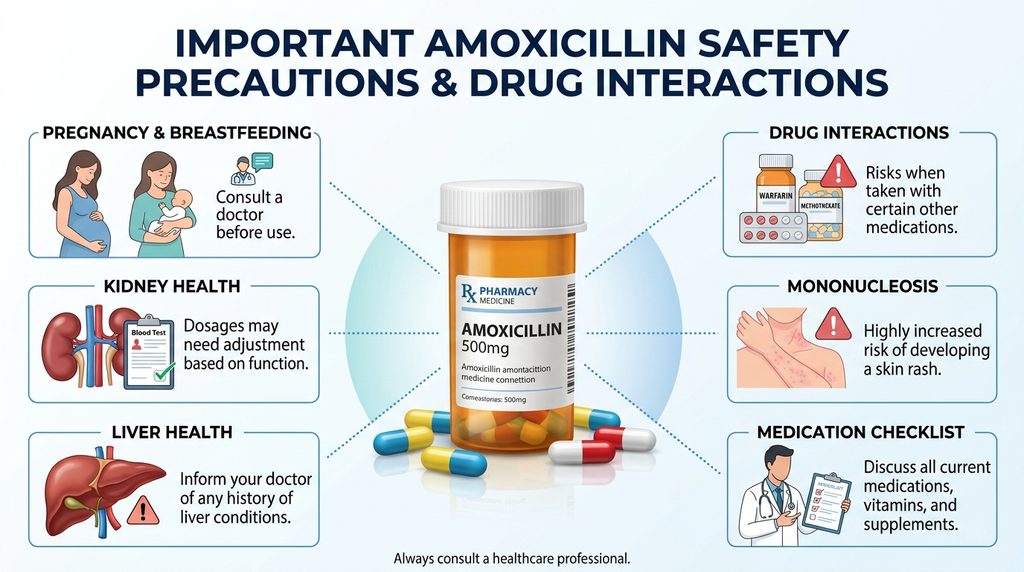
Tell your doctor about all other medicines you take. Some drugs interact negatively with amoxicillin. Blood thinners like warfarin may be affected. This can increase the risk of bleeding significantly. Methotrexate levels might rise dangerously in the body. Your doctor needs to adjust doses accordingly. Birth control pills may become less effective too. Use backup contraception during your treatment week. This prevents unintended pregnancy while on antibiotics. Keep a list of your current medications handy.
Kidney disease affects how your body processes drugs. Poor kidney function slows down elimination of amoxicillin. Your doctor may lower the dose for safety. Regular blood tests help monitor kidney health. Liver disease also requires careful monitoring and adjustment. Inform your provider if you have mononucleosis. Amoxicillin can cause a severe rash in these cases. It is generally avoided for mono patients entirely. Pregnancy and breastfeeding require special consideration too. While often safe, always confirm with your obstetrician first.
Proper Storage and Handling Tips
Store amoxicillin at room temperature away from light. Keep the bottle tightly closed when not in use. Moisture can degrade the quality of the pills. Do not store them in the bathroom cabinet. Humidity from showers damages the medication over time. Keep it out of reach of children and pets. Accidental ingestion can be harmful to small bodies. Check the expiration date on the label regularly. Expired medicine may not work effectively against infection. Dispose of unused pills properly through pharmacy programs.
Liquid forms of amoxicillin have different storage rules. Refrigeration is often required for suspensions. Shake the bottle well before each single dose. Use the measuring spoon provided with the medicine. Kitchen spoons are not accurate for dosing purposes. Discard any unused liquid after fourteen days typically. Bacteria can grow in old liquid formulations. Write the discard date on the bottle when filled. This helps you track freshness and safety easily. Never share your prescription with another person. Their condition may require different treatment entirely.
Frequently Asked Questions
What should I do if I miss a dose?
Take the missed dose as soon as you remember. If it is almost time for your next dose, skip it. Do not double up to make up for the missed one. Taking two doses at once increases side effect risks. Set an alarm on your phone to help remember. Consistency is key for effective bacterial elimination. Missing one dose is usually not a major crisis. Just get back on your regular schedule quickly. Contact your pharmacist if you miss several doses. They can advise if you need to restart the course.
Can I drink alcohol while taking amoxicillin?
Alcohol does not directly interact with amoxicillin chemically. However, drinking can worsen side effects like nausea. It may also dehydrate your body during illness. Your immune system works harder when you are sick. Alcohol puts extra stress on your liver and body. It is best to avoid alcohol until you finish treatment. This helps your body recover faster and stronger. Focus on rest and hydration for optimal healing. Wait at least forty-eight hours after the last dose. This ensures the drug is fully out of your system.
How long does it take to start working?
You may feel improvement within two to three days. Fever and pain often decrease relatively quickly. However, the bacteria are not gone yet completely. Continue taking the full course as prescribed. Stopping early because you feel better is risky. The infection can rebound with greater intensity. If you do not feel better after three days, call your doctor. You may need a different antibiotic entirely. Some bacteria are resistant to amoxicillin specifically. Your provider will switch your medication if needed.
Is amoxicillin safe for people with penicillin allergies?
No, amoxicillin is a type of penicillin antibiotic. People with penicillin allergies should not take it. An allergic reaction can range from mild to severe. Hives and swelling are common initial signs. Anaphylaxis is a life-threatening emergency possibility. Always inform your doctor of any past allergies. They will prescribe a different class of antibiotic. Macrolides or cephalosporins might be safer options. Cross-reactivity varies between different drug families. Your allergist can perform testing if unsure. Never guess when it comes to drug allergies.
Can I take probiotics with this antibiotic?
Yes, probiotics can help maintain gut health. Antibiotics kill beneficial bacteria in your digestive tract. This often leads to diarrhea or stomach discomfort. Taking probiotics two hours apart helps maximize benefits. This spacing prevents the antibiotic from killing the good bacteria immediately. Yogurt with live cultures is a natural source. Supplements are also widely available in stores. Consult your doctor before starting new supplements. They can recommend specific strains for your needs. This support aids overall recovery and comfort.
What foods should I avoid while taking it?
There are no strict food restrictions for amoxicillin. However, acidic foods may irritate an upset stomach. Spicy or greasy foods can worsen nausea symptoms. Stick to bland foods if you feel queasy. Bananas, rice, and toast are gentle options. Dairy products do not interfere with absorption significantly. Unlike some other antibiotics, calcium is not a blocker. Maintain a balanced diet to support your immune system. Fresh fruits and vegetables provide essential vitamins. Stay hydrated with water and clear broths daily. Good nutrition speeds up your healing process effectively.
Final Thoughts
Amoxicillin 500mg is a versatile and effective antibiotic. It treats a wide range of bacterial infections safely. Proper dosing ensures the best possible outcome for patients. Adhering to the schedule prevents resistance and relapse. Awareness of side effects helps you manage discomfort. Most people experience only mild temporary issues. Serious reactions are rare but require immediate attention. Always communicate openly with your healthcare provider. They are your best resource for medical decisions. Do not hesitate to ask questions about your treatment.
Completing the full course is vital for success. Feeling better does not mean the infection is gone. Trust the process and follow medical advice strictly. Store your medication properly to maintain its potency. Dispose of leftovers responsibly to protect the environment. This guide provides a solid foundation of knowledge. Use it to complement professional medical care. Your health is worth the extra attention to detail. Stay informed and proactive about your wellness journey. Recovery is smoother when you are prepared and aware.
Disclaimer
This article provides general information for educational purposes only. It was written with AI assistance to summarize medical guidelines. It is not a substitute for professional medical advice. Always consult a qualified healthcare provider for diagnosis. Information may change as research evolves over time. This guide does not cover every individual situation. Individual results vary based on health conditions. Check with your doctor before starting any medication. Do not rely solely on this text for treatment decisions. Verify all details with official medical sources.