
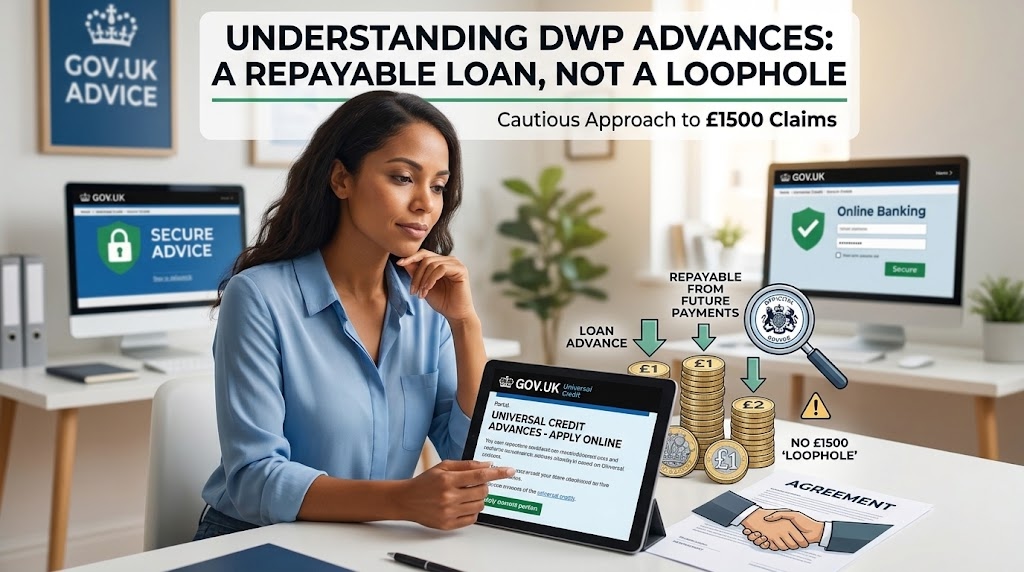
The phrase universal credit loophole £1500 spreads fast on social media. It sounds like an easy way to get extra money. A catchy name does not make a payment real. Many people search for it when bills pile up. The truth is less simple, and it matters before you act on any post you see. This guide explains what the phrase means in plain words.
You will learn where the claim came from and why it is not a legal trick. You will see what help you can get from the DWP, the government department that runs Universal Credit. We cover advance payments, Budgeting Advances, and repayment rules. You will also learn how to spot scams and what to do if you need money now. Rules change, so check GOV.UK for the latest details.
What Is the Universal Credit Loophole £1500?
The phrase is not an official benefit or grant name. We found no GOV.UK page that lists a payment with this title. Online, it usually points to a past glitch in the Universal Credit advance system. Some claimants reportedly got advance payments of £1,500 more than once. Posts and videos spread the idea that anyone could copy it. That idea is wrong and risky. Search results can also mix in unrelated £1,500 stories, so read each page closely.
Other pages use the same phrase for different ideas. Some mix it with tips on savings limits or pay rises. Some blogs call it a legal hack or a hidden bonus. Those claims do not match official guidance. A good test is simple. If a claim promises a fixed sum without a real reason, treat it with care. Official payments depend on your own circumstances.
How the £1,500 Advance Glitch Reportedly Worked
News reports from around the Covid period described a gap in the advance process. Claimants could reportedly get advance payments of £1,500 on up to three occasions. Some people who were not entitled to the money got several of these loans. Reports said fraudsters posed as jobcentre staff or loan advisers. Many of the people approached were looking for extra cash. The scammers offered to help add false details to a claim. In return, they kept £500 from each £1,500 advance.
One report said the scam was believed to total £20 million. It also said staff saw claims with obviously fake names. These are media reports, not official audit figures. The DWP said it set up an Enhanced Checking Service with fraud investigators. It also said it worked with websites to remove posts that promoted fraud. Today’s official rules do not set a fixed £1,500 advance for everyone. The limit depends on your first estimated payment. Because this happened years ago, you cannot assume the same gap exists now. Ask for proof from an official source if a post says it still works.
Why It Is Not a Legal Loophole
Getting an advance with false details is benefit fraud. The money is still a loan, so you must repay it. Repayments come out of your future Universal Credit payments. A claim built on false details can also lead to other action. The DWP can ask you to repay, offer a penalty, or take a case to court. GOV.UK describes an administrative penalty as a financial penalty offered instead of prosecution where there is clear evidence of a crime. Each case depends on the facts.
The rules have also become tougher. The Public Authorities (Fraud, Error and Recovery) Act 2025 gave the DWP new powers. The government says these include stronger debt recovery and extra checks. The DWP also says it can now claw back money owed straight from a bank account without a court order. These powers apply to debt owed to the DWP. The government says benefit fraud and error cost £9.5 billion in overpayments in 2024-25, about 3.3% of benefit spending. A quick gain can turn into a long problem.
How to Get an Advance on Your First Payment
New claimants often wait about five weeks for a first payment. GOV.UK says you can apply for an advance if you need help before then. The most you can get is your first estimated payment. Ask only for what you need, because you repay the full amount. You must explain why you need it and verify your identity. You also need bank details and must explain any money or savings you have. Your account updates to show your first payment amount after you claim. You can apply through your Universal Credit journal, your work coach, or the helpline.
You will usually find out the same day if you can get an advance. GOV.UK says you usually repay over 24 months, starting from your first payment. Imagine your first estimated payment is £344. If you take it all, about £14.33 comes off each month. Your first payment would then be £329.67. This shows why an advance feels like borrowing from your own future payments. Think of it like asking your employer for part of next month’s pay. It is not extra money.
How a Budgeting Advance Works
A Budgeting Advance is for one-off costs when you already get Universal Credit. GOV.UK lists items such as furniture, a cooker, clothes, home repairs, or a rent deposit. GOV.UK also lists mobility aids, child safety products, and funeral costs. You cannot use it for food, bills, rent, or debts. The smallest amount is £100. You can get up to £348 if you are single, £464 as part of a couple, and £812 if you have children. None of these limits reach £1,500.
You usually need six months on Universal Credit, Employment and Support Allowance, or Pension Credit. You can also qualify if you need the money to start or stay in a job. You will not qualify if you earned more than £2,600 in six months, or £3,600 for a couple. You can only have one Budgeting Advance at a time. GOV.UK says a TV can count in some circumstances. Ask your work coach if you are unsure whether your cost qualifies. Apply in your journal, to your work coach, or by phone. The helpline number is 0800 328 5644, open Monday to Friday, 8am to 6pm.
How Repayments Work and What to Do If You Struggle
Advances come out of future payments, so your payments are lower for a time. GOV.UK says you usually repay over 24 months. If you stop claiming Universal Credit, you still owe the money. If you move to another benefit, deductions usually continue. If you leave benefits, DWP Debt Management writes to you about how to repay. GOV.UK gives a simple example. An advance of £240 means £10 comes off each month over 24 months. Plan for a smaller payment before you ask for an advance.
If you cannot afford repayments, you can ask the DWP to delay them. GOV.UK pages give different delay lengths for different advance types, so check the page for yours. You can ask through your journal, your work coach, or the helpline. A delay does not wipe out the debt. Ask early, because a missed deduction can cause stress later. Keep records of what you borrowed and what you repay.

Red Flags and Scams to Avoid
Be careful with anyone who promises a fixed sum for a fee. Official help does not ask for a cut of your payment. Posts that say “secret loophole” or “guaranteed £1,500” are warning signs. Scammers may use messages that look friendly or urgent. Pause before you click links in texts or emails. Do not give your login, bank details, or ID to a stranger. Do not let anyone else make your claim in return for money. Following someone’s advice to add false details does not protect you.
Use only GOV.UK and your own Universal Credit account. Check the web address before you sign in. Keep your password private and do not reuse it on other sites. Look at your journal for changes you did not make. If you know of a fraud, you can report it through GOV.UK or the National Benefit Fraud Hotline on 0800 854 440. Check GOV.UK for the current contact details. If you shared details with a scammer, tell the DWP and your bank straight away.
What to Do If You Need Money Now or Made a Mistake
If money is tight, start with the DWP. Ask about an advance in your journal or through your work coach. If your payments were stopped or reduced, GOV.UK has a section on extra help for that case. Your local council may also help with a housing deposit, according to GOV.UK. Write a list of your bills and what you can pay each month. Free advice from Citizens Advice or MoneyHelper can help you plan. These services can look at your full situation.
If you gave false details in the past, do not ignore it. Contact the DWP or get independent advice before you act. An advice service or a solicitor can explain your options and your rights. This article cannot judge any single case. Be honest, and keep copies of messages and letters. Acting early can make the problem easier to manage. Ask any adviser to explain each step in plain words.
Frequently Asked Questions
Can I legally get £1,500 from the DWP?
There is no fixed £1,500 payment under this name. A first-payment advance can be up to your first estimated payment, which may be higher or lower than £1,500. A Budgeting Advance has lower limits. Your own circumstances decide the amount. Be wary of any page that gives one exact sum for everyone.
What if I cannot open a bank account?
GOV.UK says to talk to a Universal Credit contact at your local jobcentre or your work coach. They can explain your options for receiving an advance. Do not use someone else’s account unless the DWP agrees to it.
Does the DWP check bank accounts?
The DWP has described new powers to check things like savings and time spent abroad. News reports say the checks cover Universal Credit, Pension Credit, and Employment and Support Allowance. Check GOV.UK for how these checks work and what they mean for you. These powers are new, so details may change.
What is the difference between an advance and a hardship payment?
An advance is a loan you repay through future payments. GOV.UK has a separate section for people whose payments have been stopped or reduced. Check that section to see whether you qualify for extra help.
Do these rules apply in Northern Ireland?
Benefit administration is devolved in Northern Ireland, and the Act mentioned above applies to Great Britain. The nidirect website has its own pages on Universal Credit advances. Use the page for your own region and check which rules apply to your claim.
What if the DWP refuses my advance?
Ask why in your journal or by phone. GOV.UK lists a process called mandatory reconsideration if you disagree with a decision. Free advice services can help you with the steps and the time limits.
Final Thoughts
The universal credit loophole £1500 is a search phrase, not an official payment. It points to a reported glitch that is tied to fraud and to loans you must repay. Online posts can look helpful, but they rarely explain the repayment side. Real help exists, but it follows rules and has limits. An advance can ease a short gap, but it lowers future payments.
Your next step is simple. Check GOV.UK for the advance that fits your situation. Use your journal or the helpline to ask for help. Avoid anyone who offers a secret trick or asks for a share of your money. If you feel stuck, ask Citizens Advice or MoneyHelper for free guidance. Small steps now can prevent bigger debt later.
Disclaimer
This article is for general information. It was written with AI assistance. Information may change, and it may not cover every situation. Please check important or current details through official or trusted sources before you rely on them.