
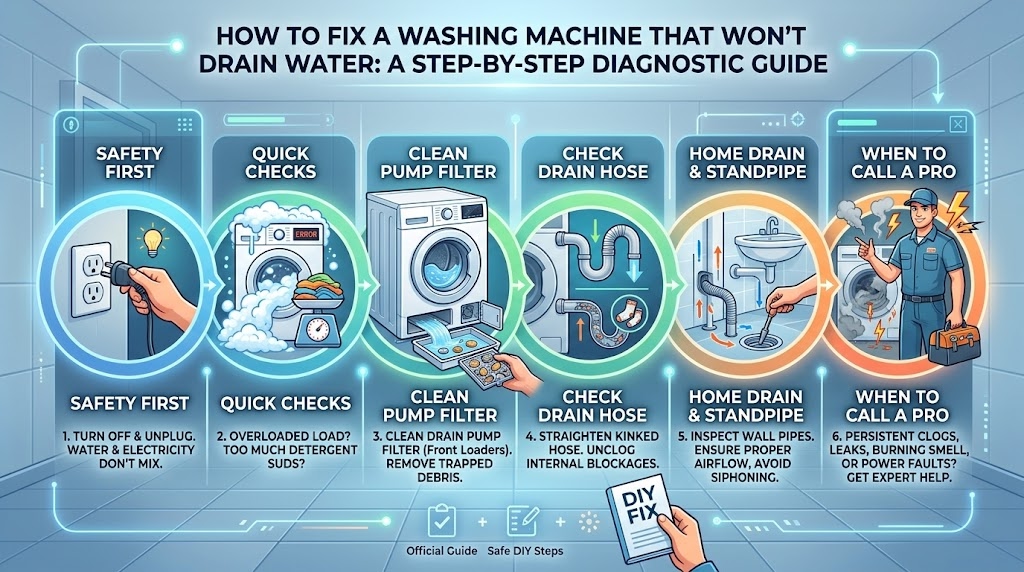
Few things feel worse than opening your washer and finding a tub full of dirty water. If you are asking, “why is my washing machine not draining,” you are not alone. This problem is common, and the cause is often simple. Many times, a small clog or a kinked hose is to blame. You may be able to fix it in under an hour with basic tools.
This guide shows you how to find the cause step by step. You will learn what to check first, how to clean the filter, and how to look at hoses and drains. You will also learn what to do when your machine will not drain or spin. At the end, you will see common mistakes and clear signs that it is time to call a pro.
Start With Safety and Quick Checks
Before you touch anything, turn off the machine and unplug it. Water and power are a risky mix. Put old towels on the floor and keep a shallow tray and a bucket nearby. If the door is locked, wait a few minutes. Many machines keep the door locked while water is inside.
Next, look for simple clues. Did the cycle stop halfway? Is there an error code on the display? Codes differ by brand, so check your manual for the exact meaning. Also ask yourself if the machine was overloaded or if you used too much detergent. Thick suds can slow the drain and confuse the machine. If you see lots of foam, wait for it to settle and run a rinse and spin cycle.

Clean the Drain Pump Filter
Many front-loading washers have a small drain filter near the bottom front. It sits behind a little panel. This filter catches coins, buttons, hair, lint, and bits of tissue. When it clogs, water cannot leave the drum. It is one of the most common reasons a washing machine is not draining water properly. Many top-loading machines do not have a filter you can reach, so check your manual first.
Open the panel and place your tray under the filter. Some models have a small emergency hose that lets you drain the water first. If yours does, pull it out and let the water run into the tray. Then turn the filter slowly to the left and take it out. Expect more water to spill, so go slowly. Remove any trash and rinse the filter under the tap. Look inside the filter slot too, because small items can hide there. Then put the filter back in tightly and close the panel.
Check the Drain Hose for Kinks and Clogs
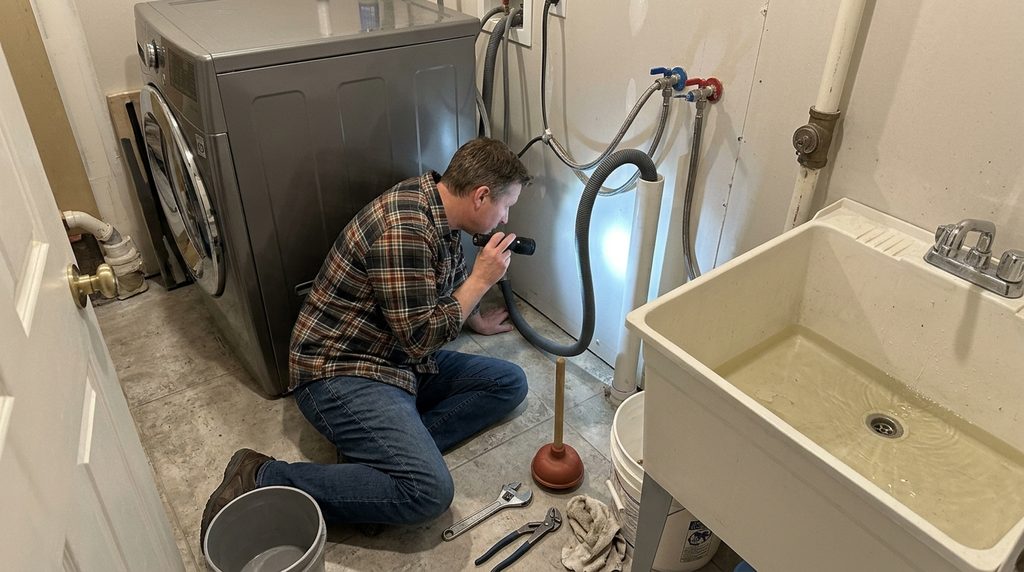
The drain hose carries used water from the machine to your home drain. It runs behind the washer, so you may not notice a problem there. A hose can get crushed when the machine is pushed against a wall. It can also bend sharply and block the flow. Pull the machine out a little and look along the full length of the hose. If you see a kink, straighten it gently.
A hose can also clog from the inside. Lint, soap scum, and small socks can build up over time. To check it, unplug the machine and take the hose off. Then hold it up and look through it. You can rinse it with water or push a soft, long brush through it. Do not force a sharp tool through it, because you may cut the hose. Put it back firmly and check the clamps. Your manual will also say how high the hose should sit, so follow that advice.
Look at the Standpipe and Your Home Drain
Sometimes the machine is fine and the problem is in the wall. Many homes use a standpipe, which is a tall pipe that the hose slots into. Others connect the hose to a sink waste pipe. If this pipe is clogged, water backs up or drains very slowly. Run a different sink or shower nearby. If those drain slowly too, the blockage is likely in the house pipes, not in your washer.
Also check how far the hose goes into the pipe. If you push it in too far, it can make a tight seal. This can cause a siphon, which means water gets pulled out of the drum too early. A too-tight fit can also stop air from moving, and the water may then drain slowly. Leave a small gap so air can flow. For a clogged house drain, a plunger or drain tool may help. For deep or repeat clogs, a plumber is the safer choice.
Why a Washing Machine May Not Drain or Spin
When your washer will not drain or spin, the machine is often protecting itself. Most washers will not spin a drum full of water. So a drain problem usually stops the spin too. Other parts can also cause trouble. A broken lid switch on a top loader may stop the cycle. A worn drain pump may not move water at all. A faulty control board may fail to send the right signal.
You can learn a lot from sound. If you hear a humming noise but no water leaves, the pump may be jammed or weak. If you hear nothing at all during the drain step, the pump may not be getting power. A rattling sound can mean a coin or small object is inside the pump. Write down what you hear and any error code you see. That note helps a repair person find the fault much faster.
Common Mistakes and When to Call a Pro
One common mistake is skipping the unplug step. Another is yanking the hose or filter out too fast. People also forget the towels, then face a flood. Using too much detergent is another trap, especially with front loaders. Many models need only a small amount of detergent, so check the pack and your manual for the right dose. Finally, some people keep restarting the cycle again and again. That can strain the pump.
Call a repair expert if you cleaned the filter, hose, and drain and the water still stays. Call one if you smell burning or see leaks from inside the machine. Also call one if the machine trips your power switch. Check your warranty before you pay for a repair, because some makers cover pump faults for a set time. In some cases, an old and cheap washer may cost more to fix than to replace. A quote can help you decide.
Front Loaders and Top Loaders Drain in Different Ways
A front loader holds its water at the bottom of the drum. A small pump then pushes the water out through the drain hose. Think of the pump as a tiny river pump. If a stick blocks it, the river stops. This is why the filter matters so much on front loaders. Top loaders hold water in a tall tub. Many also use a pump, but the design changes from brand to brand. A filter may be hidden or missing, so your manual is the best guide.
This difference changes where you should start. With a front loader, begin at the filter, then check the hose. With a top loader, begin with the hose and the lid switch, since the pump is often harder to reach. Do not open the back panel or the base unless your manual shows you how. Those parts may hold wires and moving parts. If you cannot reach the pump safely, a repair expert can do it in a short visit.

Easy Habits That Help Stop Clogs
Most clogs start with small things in your laundry. Check every pocket before you wash. Coins, tissues, hair ties, and paper can all end up in the pump. Imagine you wash a pair of jeans with a tissue in the pocket. The tissue breaks into tiny bits, and the bits travel to the filter. A few seconds of checking can save you a messy afternoon. Put small items, such as socks and bras with wire, into a mesh laundry bag.
Next, take care of the machine itself. Many makers suggest a regular cleaning cycle, so check your manual for the right one. Wipe the rubber door seal, because hair and lint often hide in the folds. Leave the door open a little after washing so the drum can dry. Also check that the machine sits level. A machine that rocks during the spin may move its hoses and make them bend. Small habits like these help your washer last longer.
Frequently Asked Questions
Why is my washing machine not draining the water after the cycle ends?
The most likely reasons are a clogged filter, a blocked hose, or a clogged home drain. A weak pump can also leave water behind. Start with the filter, then check the hose, and then test the wall pipe. If none of these help, the pump or control board may need a repair.
Why is my washing machine not draining completely?
When a little water stays in the drum, the cause is often a partial clog. It could be lint in the filter or a hose that is half blocked. A hose set too low can also let water flow back. Check your manual for the right hose height and clean the filter.
Why is my washing machine not draining clothes that feel soaking wet?
Soaking wet clothes usually mean the spin did not run well. This often happens when the machine could not drain, or when the load was out of balance. Redistribute the clothes and run a drain and spin cycle on its own. Washing smaller loads can also help.
Can I drain a washing machine by hand?
Many front loaders have a small emergency drain hose near the filter. You can pull it out and let the water run into a tray or bucket. Do this only after you unplug the machine. If you cannot find a hose, check your manual for the safe way to drain your model.
Why is my washing machine not draining in the UK, and is it different there?
The causes are much the same as in other places. A blocked filter, kinked hose, or clogged waste pipe is common. In many UK homes, the hose connects to a standpipe or a sink waste pipe, so check that point too. Always follow your brand’s manual for your exact model.
How often should I clean my washing machine filter?
There is no single rule for every machine. Many makers suggest checking it every few months. You may need to do it more often if you wash pet bedding, towels, or kids’ clothes. Check your manual for the advice that fits your washer.
Final Thoughts
A washer that will not drain is stressful, but the fix is often easy. Start with safety, then check the filter, the hose, and the wall drain in that order. Each step is simple and costs little. If you solve it early, you also protect your floor and your clothes. Take your time and work through one step at a time. Rushing is how filters get cracked and hoses get pulled loose. If water spills, stop, dry the floor, and then carry on.
If the problem stays after these checks, listen to the machine and note any error code. Then talk to a repair expert with that information ready. Keep your manual, or its online copy, close by. It shows the exact steps for your model. A little care can also stop the problem from coming back. The easy habits above take only a minute or two.
Disclaimer
This article is for general information and was written with AI assistance. Details can change, and it may not cover every machine or home. Please check your manual and use official or trusted sources before you rely on any advice. For electrical, plumbing, or safety concerns, speak with a qualified professional.