
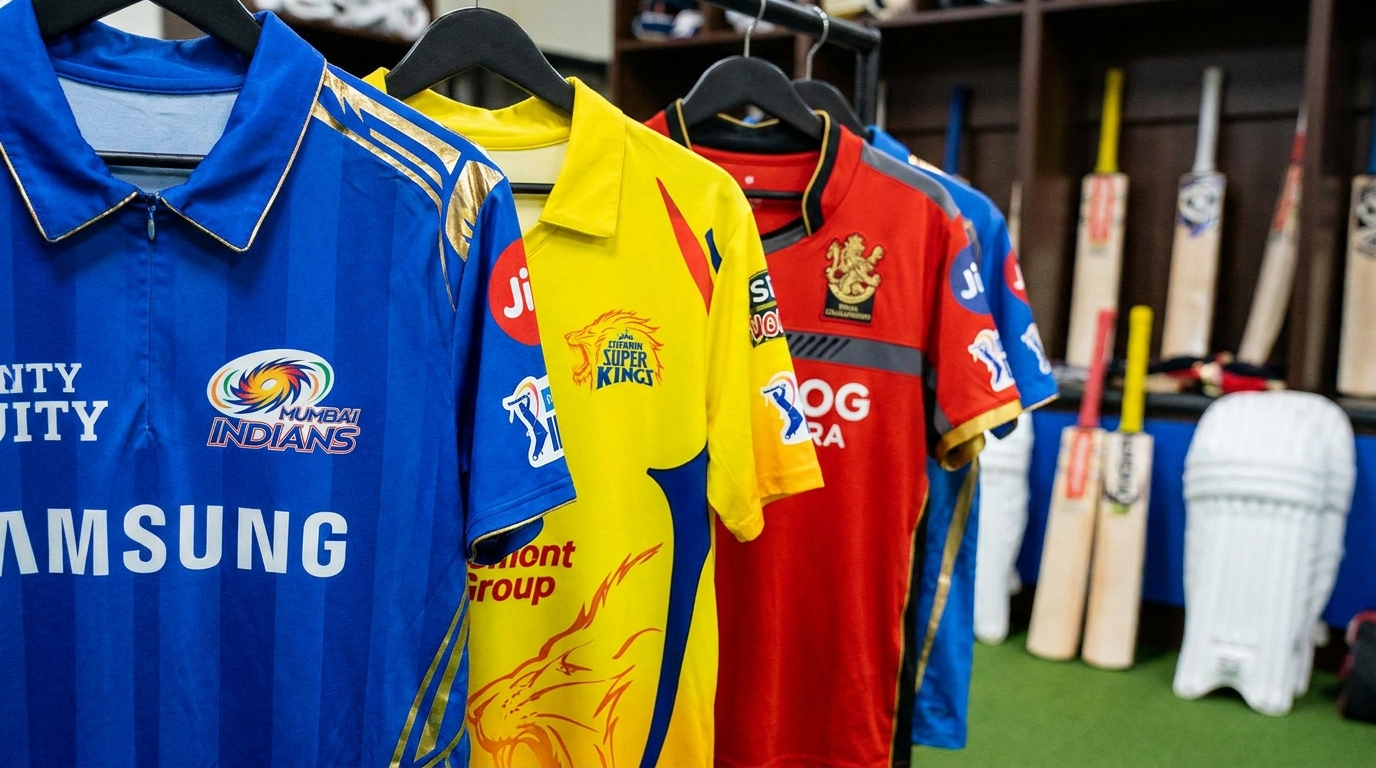
A cricket jersey is more than a uniform. It tells people who a team is before a ball is bowled. Colour, crest, name and number all carry meaning.
Uniformity Makes a Team Readable
Cricket is played across a wide oval. Umpires, spectators and broadcast cameras must read the field quickly. A consistent kit makes that possible.
Governing rules support this. Under the ICC Clothing and Equipment Regulations, the colours and design of shirts, logos included, must be uniform across a team. One squad, one look.
Clubs apply the same logic. When every player wears the same shade and crest, the group reads as a unit. That sense of unity carries into fielding drills, team photos and match day.
Colour Choice and Visibility
Colour is the base of any identity. Test cricket keeps to whites. Limited-overs formats allow coloured kits, but the shirt cannot be white, cream or a light shade that hides the white ball. Teams also register their Pantone colours with the ICC before use.
Fabric matters as much as colour. A good match shirt should:
- Wick sweat during long spells in the heat
- Stretch through the shoulders for bowling and throwing
- Hold colour after repeated washing
- Keep prints and numbers intact under heavy movement
Sublimation printing suits this job. The dye bonds with polyester fibres. It does not crack or peel like a surface transfer. A crest stays sharp across a full season.
Where Custom Cricket Jerseys Fit
Most teams do not play under ICC regulations. Clubs, schools and academies have more freedom. This is where custom cricket jerseys become a practical tool. A team can pick its palette, collar, sleeve panels and crest position.
Strong custom design follows a few technical rules:
- Use two or three colours so prints stay clean
- Avoid light shades on white-ball kits
- Keep logos clear of seams and underarm panels
- Approve a front and back mock-up before production
Check your league’s rules before printing. Some competitions set limits on colour, logo size or sponsor type.
Names and Numbers Add Personal Identity
Team identity holds individual identity inside it. ICC rules require names and numbers on shirts to match the player. Back numbers must be 25 to 35 cm tall. Name letters must be 6 to 7.5 cm. Numbers must be sewn or heat transferred, not fixed with Velcro.
Legibility is technical. High contrast between number and shirt lets cameras and scorers identify players from a distance. The number sits at the centre back, with the name above or below it.
These details give supporters someone to follow. A name on the back turns a squad into a set of people.
Clubs can use the same approach. Squad numbers, printed names and captain markings give players ownership of the shirt.
Sponsors and Commercial Identity
Sponsorship is now part of team identity. The ICC caps the number and size of logos on international shirts. A Test shirt allows five logos in total, four on the front and sleeves and one on the back. The back logo can reach 32 square inches. The full rules are published in the ICC Clothing and Equipment Regulations.
Club sides can borrow the principle. Keep sponsor marks small and consistent. A crowded shirt weakens the crest.
Heritage and Belonging
Kits carry history. ICC rules let players show a cap number or a landmark such as 100 Tests. Teams that have won world events may add a small symbol for each title, no larger than 1 square centimetre. Clubs can add a founding year, a title star or a memorial patch.
Supporters buy replica shirts for the same reason. Wearing the colours puts them inside the team.
Planning a Kit Order
Start with the crest. Fix the palette next. Choose fabric for the local climate. Confirm names and numbers early. Then check league rules on colour and logos.
Ask the printer for Pantone references so colours match across batches. Record each player’s size and role before ordering. Late changes raise cost and delay delivery.
Order a small sample batch first. Test fit across sizes, then print the full run.