
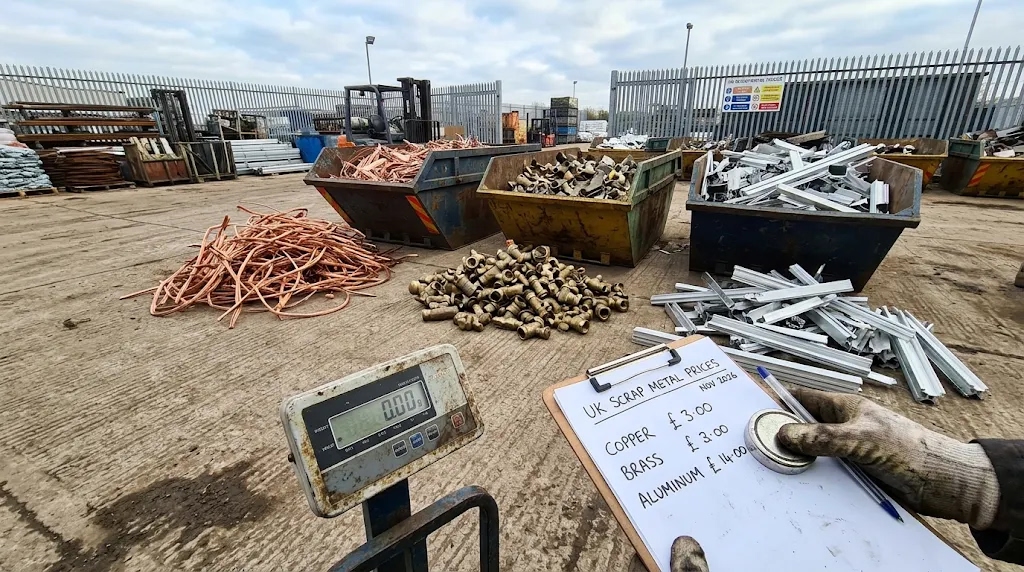
Many people search for EMR scrap metal prices today UK before they load up a van. They want to know what their copper, aluminium, or steel is worth. The honest answer changes often. Metal is a commodity, so yards update their rates as the market moves. EMR says on its own UK site that prices can change regularly. A price you saw last month may not match what a yard pays today.
This guide shows you where to look and how to read what you find. It explains the difference between a price per kg and a price per ton. You will see rough UK ranges for copper, brass, and aluminium. You will also learn what changes your payout, which mistakes cost money, and which rules apply. This guide cannot give you one fixed EMR price list, because yards set their own rates and those rates move.
How EMR Scrap Metal Prices Work
EMR stands for European Metal Recycling. It runs a large network of scrap yards across the UK. Its public site says it has over 65 yards, and 58 of them are open to the public. Each yard buys the materials it can handle, so the list of accepted metals can differ from site to site. Check your local yard before you travel.
Prices follow the wider metal market. Ferrous metals contain iron, like steel. Non-ferrous metals do not, like copper, brass, and aluminium. Non-ferrous rates link to global metal prices, while ferrous rates follow UK mill prices and export demand. The grade of your metal also matters, along with its weight and how clean it is. This is why two yards can quote different amounts for what looks like the same pile.
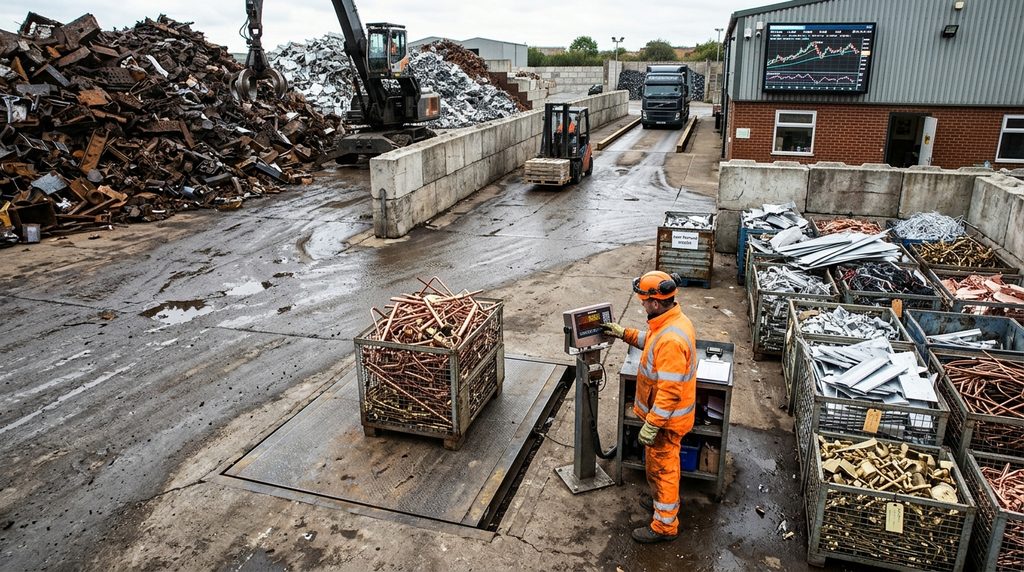
Where to Find EMR Scrap Metal Prices Today
Start with EMR’s official UK sites. EMR Local helps you find a yard and see what it buys. The pages checked for this guide did not show one full, fixed price list for every yard. EMR says prices change often, so the most reliable number comes from your chosen yard. Call or check that yard’s own page before you go.
Price websites can help you judge a quote. Scrap Local, for example, shows average prices taken from many yards across the UK. These are not EMR prices, so use them as a rough guide only. When you call a yard, ask for the price per kg for your exact grade. Also ask how long the quote stays valid.
Scrap Metal Prices Per KG and Per Ton Explained
Yards often quote big loads in pounds per tonne. Smaller sellers usually think in pounds per kg. To change a price per tonne into a price per kg, divide it by 1,000. So £200 per tonne equals 20p per kg. Most UK trade prices use the metric tonne, which is 1,000 kg. An old imperial ton is 1,016 kg, so confirm which one a quote means.
A simple example shows how this works. Suppose a yard offers £1.00 per kg for a clean aluminium grade. If you bring 40 kg, you would earn £40. That equals £1,000 per tonne. This is an example, not an EMR price. Larger loads may earn a better rate, so a small bag of metal may not match the headline per-tonne figure.
Typical UK Scrap Metal Price Ranges for 2026
One 2026 industry article gave indicative UK yard ranges from dealer price lists in July 2026. It put copper at about £4 to £9 per kg, depending on grade. It put brass at about £2.50 to £4.60 per kg. Brass tracks copper because it is mostly copper. These figures are not EMR prices, and they may be out of date by the time you read this.
Aluminium usually sits lower than copper and brass. Older trade tables show how much grade matters. In 2024, letsrecycle listed clean cast aluminium between £1,050 and £1,200 per tonne. That is roughly £1.05 to £1.20 per kg. Aluminium turnings were listed far lower, at about £350 to £450 per tonne. Today’s rates will differ, but the gap between grades is a useful lesson. Copper splits into grades too. Bright wire, braziery, and mixed brass sit at different levels, so describe your metal clearly. A vague note such as “some copper” gives the yard little to work with. Exact item names help the yard give a closer quote.
Why Prices Differ Between Yards and Regions
Location changes the price. Distance to ports and recycling centres affects transport costs. A yard near Glasgow may quote differently from a yard in the Midlands. Exchange rates, energy costs, and global demand also play a part. Aluminium is sensitive to energy prices because making it uses a lot of power. Each yard also has its own costs.
Many people expect a yard to pay the headline metal price. That is a common misunderstanding. Exchange prices are for refined metal. Yards must sort, process, and move scrap before they sell it. In the July 2026 article, yard prices sat below the refined copper price. So a big news story about metal prices will not match your payout.
How to Get a Better Price for Your Scrap
Sorting is the easiest way to earn more. Keep copper, brass, aluminium, and steel in separate bins. A magnet helps here. It sticks to steel and iron, but not to copper, brass, or aluminium. Some stainless steel does not attract a magnet, so ask if you are unsure. Remove plastic, dirt, and steel fittings from the metal. Mixed loads often earn a lower rate.
Next, compare quotes. Call at least two yards and ask for the price per kg for your grade. Ask whether stripped wire pays more than insulated cable. Stripping takes time, so it may not be worth it for small amounts. At the yard, watch the weighing and keep your receipt. Check that the weight and grade on your paperwork match your load.
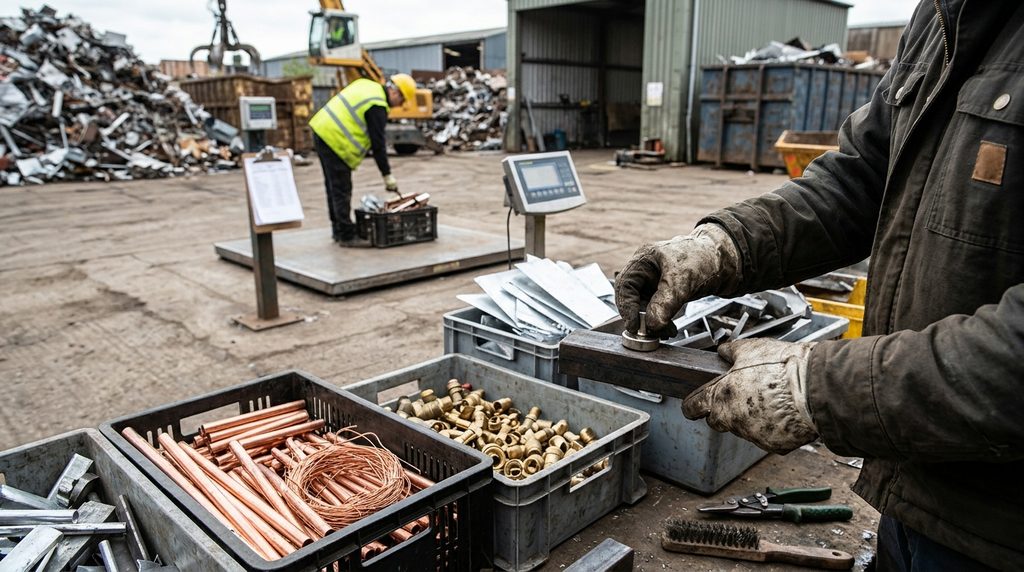
How Different Sellers Should Approach Prices
Your situation changes what matters most. A householder with a few bags of old pipes or cooking pans has a small load. For this seller, fuel and time can eat the payout. Work out the likely amount first. Multiply your weight in kg by the quoted price per kg. If the result is small, combine several clear-outs into one trip or ask a neighbour if they have metal to add.
Tradespeople and small firms often have steady loads. Their weights are larger, so a few pence per kg can change the total. Keep a simple record of each quote, the date, and the grade. Over a few weeks, you will see which yard pays well for your usual metal. Ask each yard what it needs for regular sellers. Do not assume the rules match those of another site.
A Simple Routine to Check Prices Before Each Trip
A short routine saves time and fuel. First, sort and weigh your metal at home with bathroom or luggage scales. Next, write down the grades you think you have, such as clean copper pipe or aluminium sheet. Then check the date on any price page. Finally, phone your chosen yard and read out your list. A yard can correct your grades before you load the car.
Take notes during the call. Write the price per kg, the name of the person you spoke to, and the time. If the price at the yard is lower than the price you were told, you can politely point to your note. The yard may still change the grade after it inspects the metal. Even so, a clear note keeps the talk calm and focused.
Common Mistakes That Lower Your Payout
The first mistake is driving to a yard that does not take your metal. EMR notes that not all yards accept aluminium cans, so always check first. The second mistake is hiding low-value items inside a good load. Steel bolts in aluminium or wet, dirty copper can lower the grade. If a quote seems low, ask which grade the yard gave your metal and why.
The third mistake is trusting an old page. Searches for 2022, 2023, or 2024 prices often show old figures. An old price list is like an old petrol receipt. It shows what happened, not what you will pay now. Check the date on every table. Also remember that example figures in guides, such as £200 per tonne, only show how to do the maths.
Rules to Follow When You Sell Scrap in the UK
UK law shapes how you sell. The Scrap Metal Dealers Act 2013 requires scrap dealers to be licensed. Cash payments for scrap metal are banned, so yards pay by bank transfer or cheque. Expect to show ID and your address details. Prepare these before you go so the visit runs smoothly.
Only sell metal that you own or have permission to sell. Yards may refuse a load if something looks wrong. Keep proof of where the metal came from when you can, such as a job invoice. Rules and yard practices can change. Confirm the details with your chosen yard before you visit.
Frequently Asked Questions
How can I find EMR scrap metal prices near Glasgow?
Use the yard finder on EMR’s UK site to see which yards serve your area. Then check what each yard accepts. Contact the yard for a current price. Prices in Scotland may differ from England because of transport costs and local demand.
Do I need to register with EMR before I sell scrap?
EMR Local has a registration page, and it says the first step is to find a yard. Requirements may depend on the yard and on what you sell. Check the registration page or ask the yard before you visit.
Is the price I hear on the phone the final price?
Not necessarily. Yards usually check the weight and grade when you arrive. Metal that is dirtier or more mixed than described may earn less. Ask how long a quote stays valid and what could change it.
Which items need extra care?
Some items may need special handling, such as gas cylinders, batteries, or anything with fuel or oil inside. Do not assume a yard will take them. Ask the yard before you bring them, and follow its advice on safe transport.
How often do scrap metal prices change?
Industry sources say prices vary by day, region, grade, and dealer. Copper and other non-ferrous metals may move more with global markets. Check on the day you plan to sell, rather than relying on last week’s number.
Is it better to wait for prices to rise?
Nobody can promise that. Prices can rise or fall, and forecasts are only guesses. Waiting also means storing metal safely. If you need the money or space, sell at a fair quote. If you wait, check prices often and set a price you would accept.
Final Thoughts
EMR scrap metal prices today UK are not one fixed list. They depend on the yard, the grade, the weight, and the market on that day. The best method is simple. Sort your metal, find your nearest yard, and ask for a price per kg for your exact grade.
Next, compare at least two quotes and check the date on any price page. Keep your ID ready and follow the payment rules. Use the ranges in this guide only as a rough guide. For the number that counts, ask the yard on the day you plan to sell. Small steps like these add up over time, and they protect you from guesswork.
Disclaimer
This article is for general information only. It was written with AI assistance. Prices and rules may change, and the article may not cover every situation. Please check important or current details with EMR, your chosen yard, or other official or trusted sources before you rely on them.
Explore More
- Coronation Chicken Recipe Mary Berry: Easy Step-by-Step Guide
- The Company Website IodaRacing Address: Complete Guide & Links
- Red Bull Advent Calendar 2025: All 11 Flavors Explained