

Knowing how to find out when a house was built helps in many ways. You may need the age for insurance, a repair plan, or a home purchase. You may also feel curious about the place you live. No single list holds this answer for every country, so the best path depends on where the house stands.
This guide gives you simple steps you can follow in any order. You will learn which papers to check first. Then you will see which records to try in the UK, Scotland, Ireland, NSW, Victoria, and Ontario. You will also learn how to use old maps online. Then you will see how to read clues in the house and how to avoid common mistakes.
Start With the Papers You Already Have
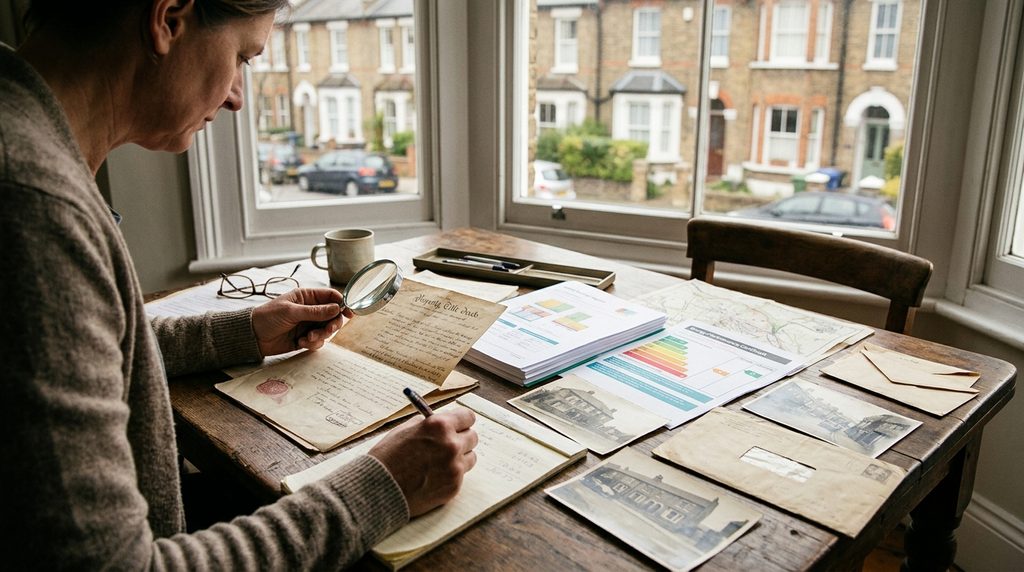
Begin with documents you own or can ask for. Your title deeds may mention a date or a first sale. A home survey for a mortgage may state the age of the building. In England and Wales, a seller fills in a property information form during a sale. It may list the age. An energy certificate may show an age band, but a band covers a span of years, not one exact year. It may also be blank.
Next, talk to people. Neighbours with similar homes may know their own build dates, and homes on one street are sometimes built close together. Long-time residents and local history groups may remember when the street grew. Write down every date you hear, along with who told you. Later records can then confirm or correct each one. Keep the notes and old photos in one file, because future owners may enjoy them.
How to Find Out When a House Was Built in the UK
In England and Wales, HM Land Registry keeps records of land ownership, not of the buildings on the land. If a developer sold your home first, the register often shows the date of that first sale or lease. That date gives a rough age. If the home did not come from a developer, the register may say nothing about age. You can buy a copy of the title register for a small fee.
Your local council may hold planning and building control records. Many councils offer online planning portals where you can search by address. For building work after 1948, ask your district council what planning records it holds. Older records are often in county record offices or local libraries. Historic England’s Aerial Photo Explorer also shows old aerial photos on a map. For older homes, try the 1862 Act register, which lists about 2,000 properties. You can also check census returns from 1841 to 1911 for the first mention of your address. Northern Ireland has its own records, so check its official sources.
How to Find Out When a House Was Built in Scotland
Registers of Scotland runs the land register. Its ScotLIS portal lets you check whether a property is on the register and buy property documents. Land records mainly cover ownership, so they may not show a build date. Valuation rolls are tax records of property ownership. You can search them through ScotlandsPeople.
The National Library of Scotland offers free online Ordnance Survey maps. Its Edinburgh Boundaries viewer shows approximate construction dates for buildings in central Edinburgh up to 1920. Historic Environment Scotland keeps Canmore, an online catalogue of the national record of the historic environment. It also offers PastMap. Goad fire insurance plans from the 1880s to the 1940s cover seven Scottish towns and show building materials. Local archives and libraries hold street directories and photos, and staff there often guide your search.
How to Find Out When a House Was Built in Ireland
Start with your title deeds. Modern Irish deeds and abstracts may describe the house, its plot, and past owners. Since March 2023, Tailte Éireann has combined Ordnance Survey Ireland, the Property Registration Authority, and the Valuation Office. Its valuation records can show occupiers, a description of the property, and the dates of changes. Your local council may hold planning files, and a county archive may hold older building plans.
The Buildings of Ireland website draws on the National Inventory of Architectural Heritage. That inventory records buildings from after 1700. The free GeoHive viewer shows historic 6 inch maps from about 1837 and 25 inch maps from about 1908. The Irish Architectural Archive also holds plans, photos, and the Dictionary of Irish Architects. Contact it for help with period homes. The National Library of Ireland also holds copies of Ordnance Survey maps for Ireland.
How to Find Out When a House Was Built in NSW and Victoria
In NSW, the Historical Land Records Viewer from NSW Land Registry Services is free to view. It holds digitised parish maps, old title registers, and plan lodgement books. These records are mainly about land and do not show whether a house stood there. Subdivision plans give a clue, because building often followed a land sale. In Sydney, old Metropolitan Detail plans show buildings from their time. Ask your council library or the State Library of NSW about them. NSW Spatial Services also offers a Historical Imagery Viewer with aerial images from the 1930s.
In Victoria, council rate books list properties by year. Work backwards from a later year until your house first appears. The Public Record Office Victoria holds many rate records and building permits, and some councils hold permits too. One Victorian council guide says full building plans were only required after 1916. Earlier homes may therefore have few plans. For the City of Melbourne from 1850 to 1915, owners only sent an intention to build notice, with no plans. LANDATA offers paid searches for historical title details.

How to Find Out When a House Was Built in Ontario
Ontario closed its Land Registry Offices in October 2020. Land records now sit on the ONland portal. These records track land ownership and seldom describe the building. One Ontario real estate lawyer notes that electronic title searches do not record the date of construction. You will need the legal description of your property, which appears on your tax bill and deed.
Municipal archives may hold the original building permit. If that is missing, a plumbing permit may help. Toronto’s archives, for example, hold permit stubs from 1927 to 1970, and staff help you order them. Tax assessment records can also show when a building first appeared. Some list a year built, so treat it as a clue and check it against a second source. Early Toronto permit indexes list permit numbers by street, not by address, so you must read the permits themselves.
How to Find Out When a House Was Built Online for Free
Old maps are a strong free tool. Open several editions of a map for your street. If your house is missing on one edition and present on the next, it was built between those dates. The National Library of Scotland also covers England and Wales, and GeoHive covers Ireland. Maps from the last 50 to 70 years are often not online because of copyright. The library’s side-by-side viewer lets you compare old maps with modern satellite images.
Use map dates with care. Mapmakers sometimes showed planned buildings that were never built, and some maps copied older surveys. Check a second source before you trust the date. Free access is not the same for every record. A UK title register and a LANDATA search both cost money, so check the price first. For a newer home, planning records often give a better answer than old maps.
Read the House Itself for Clues
Think of the house as a witness that cannot speak but still leaves clues. Some older homes carry an “Erected” date or a house name carved into the front. Roof type, window position, and building style can point to an era. Style gives a range of years, not an exact date. The Heritage Council of Victoria offers a booklet called What House Is That? to help you name styles. This works like guessing a person’s age from their look. The guess helps, but it needs proof.
Be careful, because owners change houses over time. A new front or new windows can hide the original style. Look at several features, such as the chimney, the brickwork, and the inside layout. Then compare your guess with a map or a permit. If the clues and the records agree, you can feel more confident.
Common Mistakes and Easy Fixes
One easy mistake is treating a deed date as the build date. A deed shows a land deal, and the house may be older or newer. Imagine a deed dated 1898. The home on that plot may have been built years later, so check it against a map. Another mistake is forgetting that houses can be renumbered, so search by street history too.
Many people expect one exact date, but older homes may only give a range. Write it as “built between 1896 and 1912.” Keep a note of each source you used. If two sources disagree, give more weight to records made at the time, such as permits and maps. If an insurer or buyer asks for the age, tell them how sure you are. Ask what level of detail they need.
Frequently Asked Questions
Can I type my address and get the build date?
In England and Wales, HM Land Registry has said no central body records when houses were built. Some websites offer age tools based on a postcode or an energy certificate, but they may show only a period. Treat any result as a starting point. Then confirm it with a record.
Will the council always have records for an old house?
Not always. A Hampshire archives guide says planning records took their modern form around 1895. It also says old files survive in a patchy way. Ask your local record office, because it may hold files the council no longer has.
What if my house is listed?
England’s National Heritage List records a short overview of the construction date for each listed building. Wales has Cadw’s National Historic Assets of Wales. Check the entry for your address. Then compare its date with maps or other records.
Can a surveyor help date a house?
A surveyor may help date a home from its materials and building methods. One RICS firm says home surveys can help show how a house was built and help date it. Ask what the survey will cover and what it costs before you book.
Why do insurers ask for the age of a home?
Older homes can bring different repair costs and risks, such as damp or old materials. Insurers often use the age to set cover and price. If you cannot find an exact year, ask your insurer how they want an estimate shown.
Do I need to own the house to research it?
Many map sites, libraries, and archives are open to anyone, so you do not need to own the house. Some records, such as title documents, may follow different rules or cost money. Check each official site for current access rules.
Final Thoughts
Learning how to find out when a house was built works best as a small investigation. Start with your own papers, then use local records and old maps for your region. Add clues from the house itself. When two or three sources agree, you can trust your date range.
Your next step is simple. Pick the section above that matches your location and open the official site it names. Write down each date you find and where it came from. If the trail goes cold, ask a local archive or history group for help.
Disclaimer
This article is for general information only. It was written with AI assistance. Records, fees, and online tools can change, and this guide may not cover every situation. Please check official or trusted sources, such as your land registry, council, or archive, before you rely on any detail.