

Many drivers search, “You wish to tow a trailer. Where would you find the maximum noseweight for your vehicle’s tow hitch?” before their first trip. The short answer is your vehicle handbook. That book lists the limit set by the car maker. The number matters because the weight on the tow ball changes how your car and trailer handle. Too much weight can upset the car. Too little can make the trailer sway.
This guide shows you where to look and how to read what you find. You will learn what noseweight means and how to check the towbar plate. You will also see what to do when two numbers do not match. Later sections cover how to measure the real weight on your hitch. Rules and labels can differ by country and vehicle, so check your own paperwork before you tow.
What Noseweight Means and Why It Matters
Noseweight is the downward force that a trailer puts on the tow ball. You may also see it called nose load, tow ball load, or vertical load. Picture a seesaw with a child on one end. The seesaw tips if the weight sits too far to one side. A trailer works in a similar way, and the tow ball acts like the pivot. The weight on the front of the trailer changes how the whole setup behaves.
Too much noseweight pushes down on the back of your car. That can lighten the front wheels and make steering feel less sharp. Too little noseweight can let the trailer sway from side to side. The National Caravan Council says the reading on a stationary trailer should not go above the lower of the towbar, ball, or hitch limits. The car maker sets a separate limit for the car.
You Wish to Tow a Trailer. Where Would You Find the Maximum Noseweight for Your Vehicle’s Tow Hitch? Start With the Handbook
Your vehicle handbook is the first place to look. It is also called the owner’s manual. Car makers set a noseweight limit for each model. It usually sits in the towing or technical data section. Use the index and search for words such as towing, towbar, tow ball load, or vertical load. Brands use different words, so check a few terms.
The figure can differ between engine types or trim levels of the same model. Make sure you read the page for your exact version. Handbooks list other numbers nearby, such as braked and unbraked trailer weights. Do not mix those up with noseweight. If you lost the paper copy, the car maker’s website or a dealer may help. Check that any digital copy comes from an official source.
Checking the Towbar Plate and Other Labels
A fitted towbar has its own limit. Look for a plate or label on the towbar or in its paperwork. The Camping and Caravanning Club explains that the S value on a type approval plate shows the maximum noseweight for that towbar. It is not always the same as the limit for the car. The plate shows other letters too, so look for the S.
The trailer has a limit as well. A caravan or trailer maker may print it on a hitch plate or in the owner’s manual. One caravan maker’s guide says the chassis limit is the S number stamped on the AL-KO hitch. The VIN plate sits under the bonnet or inside the driver’s door in many cars. Online pages disagree on whether it shows noseweight, so treat it as a place to check, not the main source.
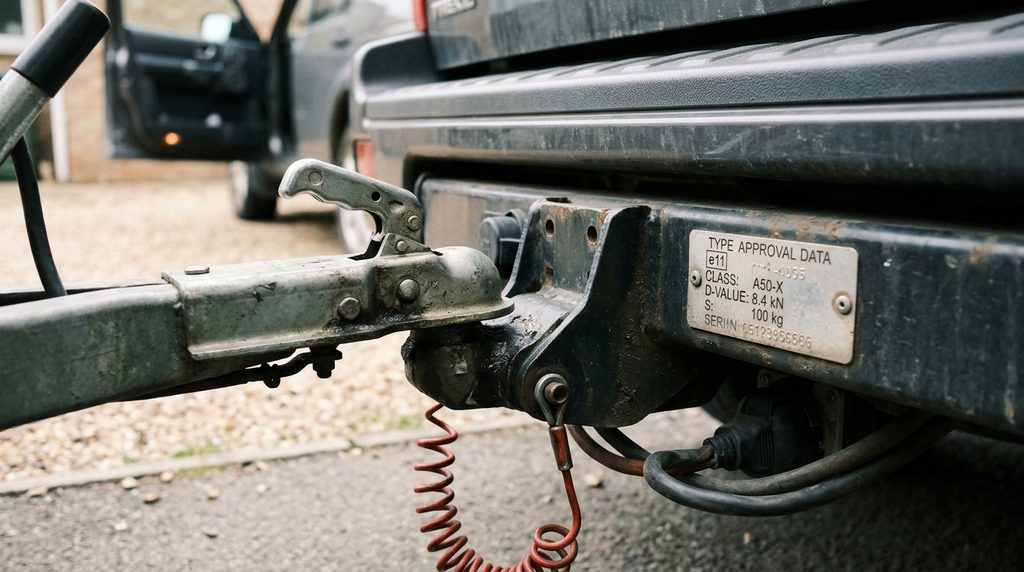
What to Do When Two Numbers Do Not Match
You may end up with three figures: one for the car, one for the towbar, and one for the trailer. A caravan maker’s guide gives an example. Their car allowed 100 kg, the towbar 150 kg, and the caravan 150 kg. In that case, the car sets the limit. Follow the lowest figure. Think of a chain, which is only as strong as its weakest link.
A stronger towbar does not raise the limit for the car. Some low-quality pages claim an upgrade can raise the maximum, but the car maker’s figure still applies. The same rule works the other way round. A strong car with a weak towbar must follow the towbar. Write the three numbers down before each trip so you can compare them quickly.
How to Measure the Real Noseweight on Your Hitch
Finding the limit is only half the job. You also need to know the real weight on your tow ball. A noseweight gauge is made for this task and shows the reading in kilograms or pounds. Load the trailer the way you plan to travel. Park on level ground and follow the instructions that come with the gauge. Measure again if your load changes.
If the reading is too high, move heavy items closer to the axle. If it is too low, move some weight toward the front. Small changes can make a large difference, so move items a little at a time. Remember to count water, gas bottles, and bags too. Tow ball boxes and bike racks add weight to the hitch as well. One roof box maker says the gear plus the platform cannot exceed the towbar noseweight.
A Simple Example: A Weekend Camping Trip
Imagine Sam plans a camping trip with a small box trailer. Sam checks the handbook and finds 75 kg for the car. The towbar plate shows an S value of 100 kg. The trailer paperwork says 120 kg. These numbers are only an example. In this case, Sam must stay under 75 kg.
Sam loads the trailer and measures 82 kg. The cooler and water jugs sit far forward. Sam moves them closer to the axle and measures again. The new reading is 68 kg, so the setup is within the car’s limit. Sam also checks the trailer maker’s advice, since too little weight can cause sway. Then Sam saves the numbers on a phone for the next trip.

How Different Drivers Can Use This Advice
Caravan owners often have the longest list of figures to check. They have a car limit, a towbar limit, and a hitch limit. Someone with a small utility trailer may have fewer papers, but the same rule applies. Check the car and the towbar, then weigh the hitch. Hire vans and borrowed cars need the same checks, so ask for the handbook before you set off.
Newer vehicle types can have their own limits. Electric and hybrid models have handbook figures, and some models are not rated to tow at all. Imported cars may use different labels or units. If you buy a used car, ask the seller for the handbook and any towbar papers. Keep these papers together in one folder so you can find them fast.
What to Do If You Cannot Find the Number
Start with the glovebox and any digital copy of the handbook. Next, check the car maker’s website. If you still cannot find it, call a dealer or the maker’s agent. Have your registration number or VIN ready. They can look up the right figure for your exact model. Do not guess, and do not copy a number from a forum post for a different car.
Typical ranges online can look helpful, but they vary by vehicle. Your car may fall outside a range quoted for cars in general. For a fitted towbar, ask the fitter for the paperwork. If the plate is worn, contact the towbar maker with any details you can read. The Camping and Caravanning Club says a zero gross train weight on the VIN plate means the vehicle cannot tow.
Common Mistakes That Cause Trouble
One common mistake is reading the wrong line. Towing capacity and noseweight are different numbers. Another is checking the limit but never weighing the hitch. A third is measuring an empty trailer, then loading it later. Mixing up kilograms and pounds can also cause a big error, so check the unit.
Some drivers forget that noseweight also counts against the car. The weight on the ball presses on the rear axle. Check the VIN plate or handbook for rear axle and payload limits, since people and luggage add load. Watch for warning signs on the road. Swaying, a light front end, or a low rear can mean the setup needs work. Pull over safely and fix it before you go on.
Frequently Asked Questions
Is noseweight the same as towing capacity?
No. Towing capacity is the total weight the car can pull. Noseweight is the downward force on the tow ball. Both numbers appear in your handbook, but they answer different questions.
What is noseweight called in the US?
In the US and Canada, it is usually called tongue weight. The owner’s manual is still the first place to check. Hitch labels may show a rating too, so compare both and follow the lower number.
Is the answer the same for “You wish to tow a trailer. Where would you find the maximum noseweight for your vehicle’s tow hitch?” on a driving theory test?
Practice test sites give the vehicle handbook as the answer to this question. Real towing needs more checks. Look at the towbar plate and the trailer paperwork too.
How often should I measure noseweight?
Measure after you load the trailer for a trip. Measure again after big changes, such as adding water or moving heavy gear. A quick check can save you from a handling problem on the road.
Can the noseweight be too low?
Yes. Too little weight on the ball can let the trailer sway. Move some load forward and measure again. Check the trailer maker’s advice for your model.
Who can help if my handbook is missing?
A dealer or the car maker’s agent can help. A towbar fitter can explain the towbar plate. A caravan or trailer club may also guide you. Give them your vehicle details, and ask them to confirm the figures in writing if possible.
Final Thoughts
You wish to tow a trailer, and you now know where to look. Start with the vehicle handbook, then check the towbar plate and the trailer paperwork. Follow the lowest figure you find. This simple habit protects your car, your towbar, and other road users.
Next, measure the real weight on your hitch with the trailer loaded. Adjust the load until the reading sits under the limit. Save your numbers on your phone for next time. If anything feels unclear, ask a dealer, a towbar fitter, or the car maker. A few minutes of checking can make every trip calmer.
Disclaimer
This article is for general information only. It was written with AI assistance. Towing rules, labels, and vehicle figures can change, and the article may not cover every situation. Check your vehicle handbook, towbar plate, and official or trusted sources before you tow. For personal advice, speak to a qualified towbar fitter or the car maker.