

Driving on a motorway at night can feel tricky, especially in heavy rain or fog. Small coloured studs on the road help guide drivers safely between lanes and along the edges. Many learner drivers and theory test candidates ask the same question: what colour are the reflective studs on a motorway? Knowing the answer helps you stay in the right lane and understand what each colour means.
This guide explains what motorway studs look like and what each colour tells you. You will learn where red, white, amber, and green studs appear on UK motorways. We will also cover common mistakes drivers make and a few safety tips for driving at night or in poor weather. By the end, you should feel confident reading these markings on any UK motorway.
What Are Reflective Studs on a Motorway?
Reflective road studs, often called cat’s eyes, are small devices fixed into the road surface. They contain tiny mirrors that reflect your headlights back at you. This makes them easy to spot at night, even when the road markings are hard to see. UK motorways use several different stud colours, and each colour has its own specific meaning under the Highway Code.
These studs help drivers judge their position on the road, especially in poor visibility. Rain, fog, and darkness can make painted white lines difficult to see clearly. Reflective studs stay visible because they bounce light straight back toward your car. This simple design has stayed in use for many years because it works well and needs little upkeep.
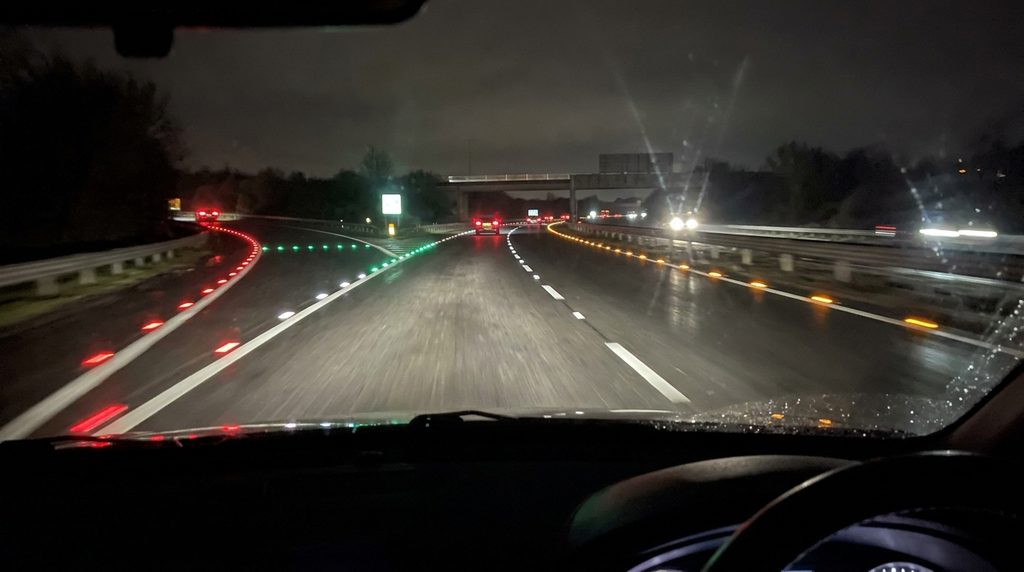
Red Studs: Marking the Left Edge of the Motorway
Red reflective studs mark the far left edge of the carriageway, next to the hard shoulder. They show drivers where the main driving lanes end and the hard shoulder begins. This edge is important, since the hard shoulder is meant for emergencies, not normal driving. On smart motorways, lane use can change, so it helps to combine this stud information with current road signs.
Seeing red studs on your left is a useful signal in heavy fog or rain. If you notice them appearing more often than expected, you may be drifting too far left. Staying aware of this red line can help you correct your position early, before drifting further off course. This is especially useful at night, when the hard shoulder edge can be hard to judge by sight alone.
White Studs: Dividing the Driving Lanes
White reflective studs sit between the lanes used for normal driving. They work alongside the painted white lines you already see during the day. At night, these studs become much easier to spot than paint alone, especially under heavy rain. They help drivers judge lane position and stay centred, even when visibility drops.
Many drivers rely on these white studs more than they realise, especially during long motorway journeys at night. If the studs on either side of your car look evenly spaced, you are likely driving straight within your lane. If you notice the gap changing suddenly, it may mean you are drifting sideways without noticing. Checking your position against these studs can help you correct small steering mistakes before they become bigger problems.

Amber Studs: Marking the Central Reservation
Amber, or yellow, studs mark the right-hand edge of the carriageway, next to the central reservation. The central reservation is the barrier or strip that separates traffic travelling in opposite directions. These amber studs warn drivers that they are close to the central divide, not the opposite carriageway itself. On many motorways, this amber line runs alongside a solid white line as an extra visual guide.
Noticing amber studs on your right can help you judge how close you are to oncoming traffic lanes. This becomes especially useful during overtaking on a motorway with several lanes. If the amber studs seem closer than expected, it may be a sign to ease back toward the centre of your lane. This colour exists specifically to separate directions of traffic, so it carries a slightly different meaning than the red or white studs.
Green Studs: Slip Roads, Junctions, and Exits
Green reflective studs appear where a slip road joins or leaves the motorway. They mark the edge of the main carriageway at entrances and exits. This tells drivers that a junction, slip road, or service area access point is nearby. Seeing green studs is a useful early signal that other vehicles may be joining or leaving the road close to your position.
Some motorways also use green and yellow studs together during roadworks or temporary lane changes. This combination usually points to a different lane layout than normal, often set up for safety during construction work. Because temporary road layouts can vary by location, it always helps to follow the actual road signs and cones alongside these studs. The studs give a helpful guide, but current signage should always take priority during roadworks.
Why These Colours Matter for Safe Driving
Understanding stud colours is not just useful for passing a theory test question. It also supports safer real-world driving, especially at night or in bad weather. For example, a driver unfamiliar with amber studs might not realise how close they are to the central reservation during an overtake. Knowing each colour’s meaning gives you another layer of awareness beyond your mirrors and lane markings.
A simple way to remember the system is to think of the studs as a colour-coded map. Red sits on the far left, white divides the lanes, amber marks the centre line, and green appears near junctions. This pattern stays consistent across most UK motorways, which makes it easier to learn once. Still, always rely on current road signs and markings first, since temporary works can sometimes change the usual layout for a short time.

Frequently Asked Questions
What colour are the studs on a smart motorway?
Smart motorways generally use the same stud colour system as standard motorways. Red, white, amber, and green studs still apply, though lane use can change based on overhead signs. Always follow the electronic signs above the road, since they show current lane rules.
Do all UK motorways use the same stud colours?
The core colour system, as set out in the Highway Code, applies across UK motorways. However, exact stud placement can vary slightly depending on road design and local conditions. Always combine stud colours with other road markings and signs for the clearest picture.
Why do some motorways have green and yellow studs together?
This combination usually appears during roadworks or temporary lane changes. It often signals a different lane layout than the normal pattern. Always follow the physical road signs and cones in these areas, since they give the most current information.
Can reflective studs wear out or stop working?
Yes, studs can become damaged or less reflective over time due to traffic and weather. Highway authorities carry out regular maintenance, but a faded stud can sometimes be harder to see. If you notice a stretch of poor visibility, report it to the relevant road authority if possible.
Is this stud colour system tested in the UK driving theory test?
Yes, questions about motorway stud colours commonly appear in the UK theory test. Learners are expected to know what red, white, amber, and green studs each represent. Studying the official Highway Code is the best way to prepare for these questions accurately.
Do other countries use the same stud colour system as the UK?
Stud colour systems can differ from country to country. Some nations use similar ideas, while others follow different rules entirely. If you plan to drive abroad, check the official road rules for that specific country before your trip.
Final Thoughts
Knowing what colour the reflective studs on a motorway represent can make night driving feel much safer. Red studs guide you along the left edge, white studs divide the lanes, amber studs mark the central reservation, and green studs warn of nearby junctions. This simple colour system gives drivers an extra way to judge their position, especially when rain, fog, or darkness make painted lines harder to see.
If you are preparing for your theory test or simply want to drive more confidently, take time to learn this pattern well. Pay attention to these studs next time you drive on a motorway, especially at night. Combining this knowledge with current road signs and safe driving habits will help you stay aware and in control on any UK motorway.
Disclaimer
This article is for general information only and was written with AI assistance. Road rules and motorway layouts can change over time or vary by location. It may not cover every situation you encounter while driving. Always check the official Highway Code or other trusted UK road safety sources for the most current and complete information.