
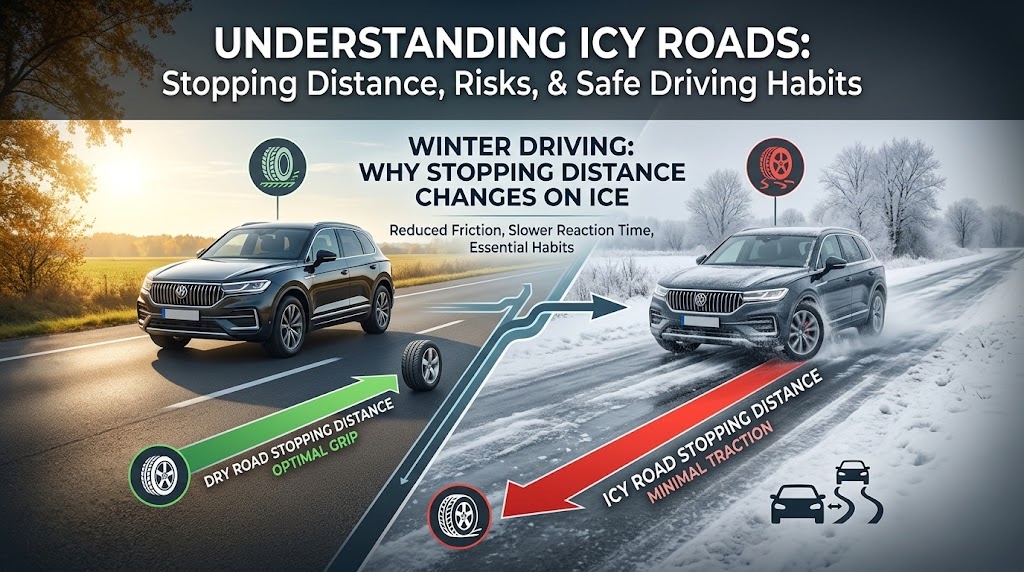
Winter driving changes how your car behaves on the road. Many drivers do not realize how much ice affects their ability to stop safely. This matters because a short delay in stopping can lead to a serious crash. Understanding how much can stopping distance increase in icy conditions helps you plan ahead and avoid danger.
This guide breaks down the numbers behind icy stopping distances in simple terms. You will learn why ice is so dangerous, how much extra distance you may need, and what you can do to stay safe. We will also cover common mistakes drivers make and simple habits that can protect you this winter.
Why Stopping Distance Changes So Much on Ice
Your tires grip the road through friction. Friction is the force that slows your car down when you brake. Ice removes most of that grip because it creates a smooth, slippery layer between your tires and the road. Without enough friction, your wheels can spin or slide instead of gripping, which means your brakes cannot work as well as they do on dry pavement.
This is why stopping distance grows so much in icy weather. On a dry road, your tires can grab the surface almost right away. On ice, your tires may struggle to find any grip at all. Even a short patch of black ice can turn a normal stop into a long, slow slide. This is also why experts warn drivers to slow down early instead of waiting until the last second to brake.
How Much Can Stopping Distance Increase in Icy Conditions
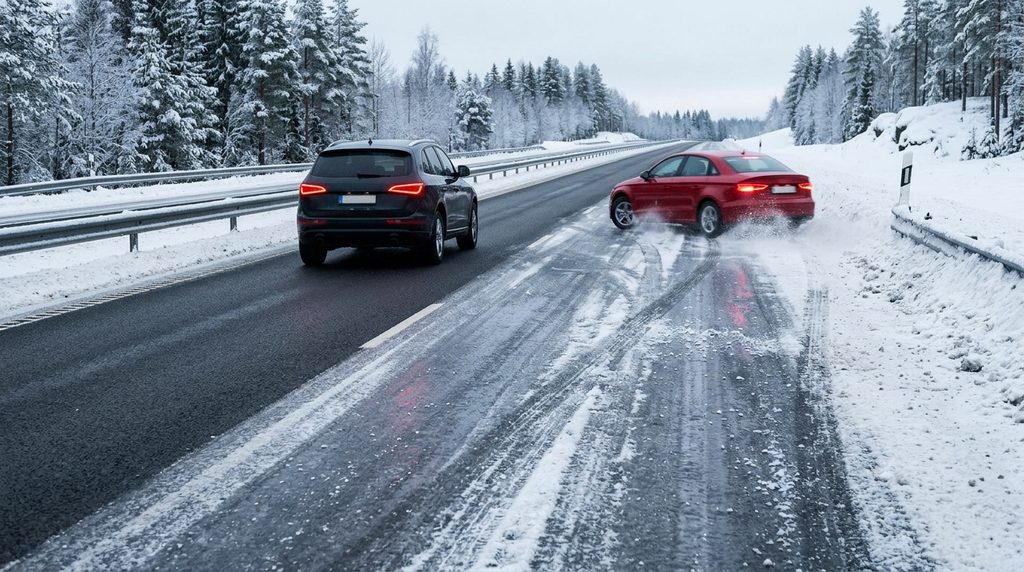
Many driving safety groups explain that stopping distance can increase several times over on icy roads compared to dry roads. On dry pavement, a car moving at a normal speed may stop within a short, predictable distance. On ice, that same car may need far more space to come to a full stop because the tires cannot create strong friction.
Exact numbers can vary based on tire type, car weight, road temperature, and the thickness of the ice. Because of this, you should treat stopping distance estimates as general guidance rather than an exact promise. The safest approach is to assume your car will need much more room to stop on ice than it does on a normal road, and to drive in a way that gives you that extra space.
Factors That Affect How Far You Slide
Not all icy roads behave the same way. Some icy patches are thin and only slightly reduce grip, while others create almost no traction at all. The temperature of the ice also matters, since very cold ice can feel more slippery than ice near the melting point. Your tire type plays a big role too, since winter tires are built with rubber that stays flexible in cold weather.
Your driving speed before you brake also changes how far you slide. Higher speeds always need more stopping distance, and this effect becomes stronger on ice. The weight of your vehicle matters as well, since heavier vehicles may take longer to slow down once they start sliding. Road conditions can also change quickly, so a clear patch one mile may turn icy the next, especially near bridges or shaded areas.
Common Mistakes Drivers Make on Icy Roads
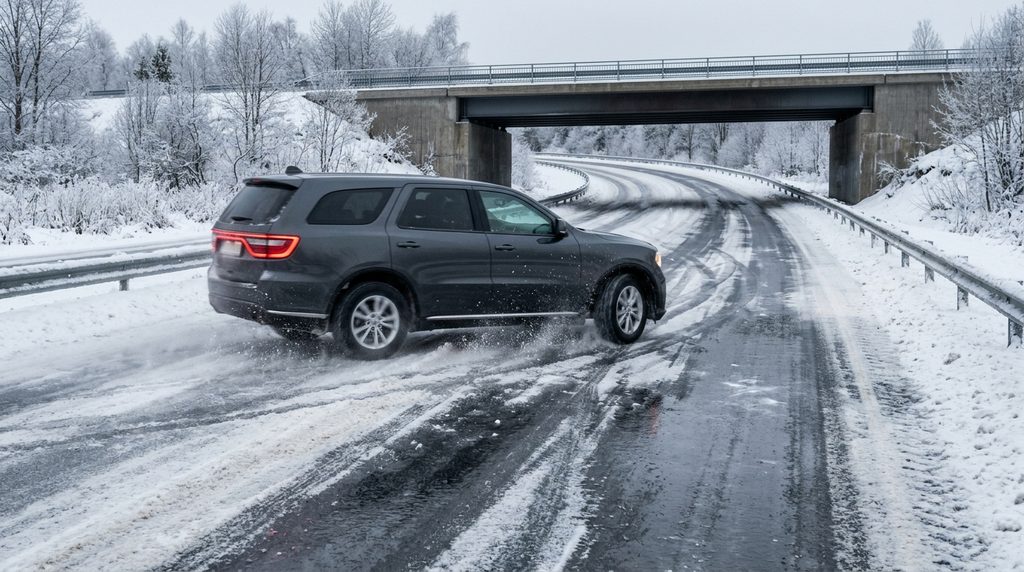
One common mistake is braking hard and fast, the same way you might on a dry road. This often causes the wheels to lock up, which makes the car slide even more. Another mistake is following too closely behind other vehicles, which leaves no room to react if the car ahead slows down suddenly. Many drivers also assume four-wheel drive helps them stop faster, but four-wheel drive mainly helps with traction while moving, not with braking.
Another common error is ignoring road signs that warn about icy patches, bridges, or shaded curves. These areas often free faster than open roads because they lose heat more quickly. Drivers sometimes also forget to check their tire tread before winter begins, which can make a big difference in how much grip they have. Fixing these mistakes is simple: slow down early, leave extra space, and check your tires regularly.
Simple Ways to Adjust Your Driving in Icy Weather
A helpful first step is to slow down well before you reach a known icy spot. This gives your tires more time to respond if they start to slide. You should also increase the distance between you and the car ahead, since you may need several times more room to stop safely. Many experts suggest leaving at least eight to ten seconds of space in icy conditions instead of the usual two or three seconds used on dry roads.
Smooth, gentle braking is much safer than sudden stops. Light pressure on the brake pedal gives your tires a better chance to grip the road without sliding. If your car has anti-lock brakes, you can press the pedal firmly and let the system pulse the brakes for you. If you feel your car start to slide, ease off the gas and steer gently in the direction you want to go, rather than jerking the wheel.
What To Do If Your Car Starts to Slide
If your car begins to slide on ice, try to stay calm and avoid sudden movements. Quick braking or sharp turns can make the slide worse. Instead, take your foot off the gas and let the car slow down naturally. Look toward the direction you want to go, since your hands often follow where your eyes are focused.
If you have time and space, gently steer in the direction of the slide to help regain control. Avoid slamming on the brakes, since this can lock your wheels and cause you to lose steering control completely. Once your tires regain some grip, slowly straighten the wheel and continue at a lower speed. If the road stays icy, consider pulling over safely until conditions improve, rather than continuing to drive at normal speed.

A Helpful Way to Think About Icy Stopping Distance
A simple way to understand this idea is to imagine walking on a smooth floor in socks compared to walking in shoes with good grip. On a dry floor, your shoes can stop you quickly because they grip well. On a freshly mopped floor, your socks slide much farther before you stop, even if you try to stop quickly. Icy roads act the same way for your car’s tires.
This comparison helps explain why driving habits must change in icy weather. Just like you would walk slower and more carefully on a slippery floor, your car needs a slower, gentler approach on icy roads. The less grip available, the more space and time you need to stop safely. Keeping this simple picture in mind can help you judge your speed and following distance more naturally while driving.
Frequently Asked Questions
Does weather temperature change how slippery ice becomes?
Yes, temperature can affect how slippery ice feels. Ice closer to the freezing point often has a thin layer of water on top, which can make it more slippery. Colder ice may feel more solid, but it can still offer very little grip for your tires.
Can winter tires fully prevent sliding on ice?
Winter tires can improve grip, but they cannot remove the risks of icy roads completely. They are designed with rubber that stays softer in cold weather, which helps with traction. Even with winter tires, you should still slow down and increase following distance on icy roads.
Is it safer to drive in a lower gear on ice?
Using a lower gear can help you control your speed without relying only on the brakes. This may reduce sudden wheel spin, especially on hills. It does not replace the need for careful braking and slower speeds.
Why do bridges freeze before regular roads?
Bridges lose heat from both the top and bottom, since air flows underneath them. This causes them to cool faster than roads that sit on solid ground. Because of this, bridges often become icy before nearby roads do, even when the air temperature seems mild.
Does cruise control affect safety on icy roads?
Many safety experts suggest avoiding cruise control on icy roads. Cruise control can make it harder to react quickly if your tires lose grip. Manual control over your speed gives you better response time if the road suddenly becomes slippery.
What should I check on my car before winter driving?
Check your tire tread depth and tire pressure before icy weather begins. You should also test your brakes and make sure your windshield wipers and fluid work well. Keeping your fuel tank at least half full can also help prevent fuel line freezing in very cold conditions.
Final Thoughts
Icy roads create real risks because they reduce the grip your tires need to stop safely. Stopping distance can increase by a large amount compared to dry roads, so it is important to slow down early and give yourself extra space. Understanding how much can stopping distance increase in icy conditions helps you make smarter choices before you even start your trip.
The best way to stay safe is to combine good habits with careful judgment. Slow down in icy areas, increase following distance, and avoid sudden braking or turning. If conditions feel unsafe, it is always better to wait until roads clear or seek updated guidance from local traffic authorities before continuing your drive.
Disclaimer
This article is for general information and was written with AI assistance. Driving conditions, vehicle capabilities, and safety guidance can change, and this guide may not cover every situation. Always check official traffic authorities, vehicle manufacturers, or trusted local sources for current and specific safety advice before driving in icy conditions.