
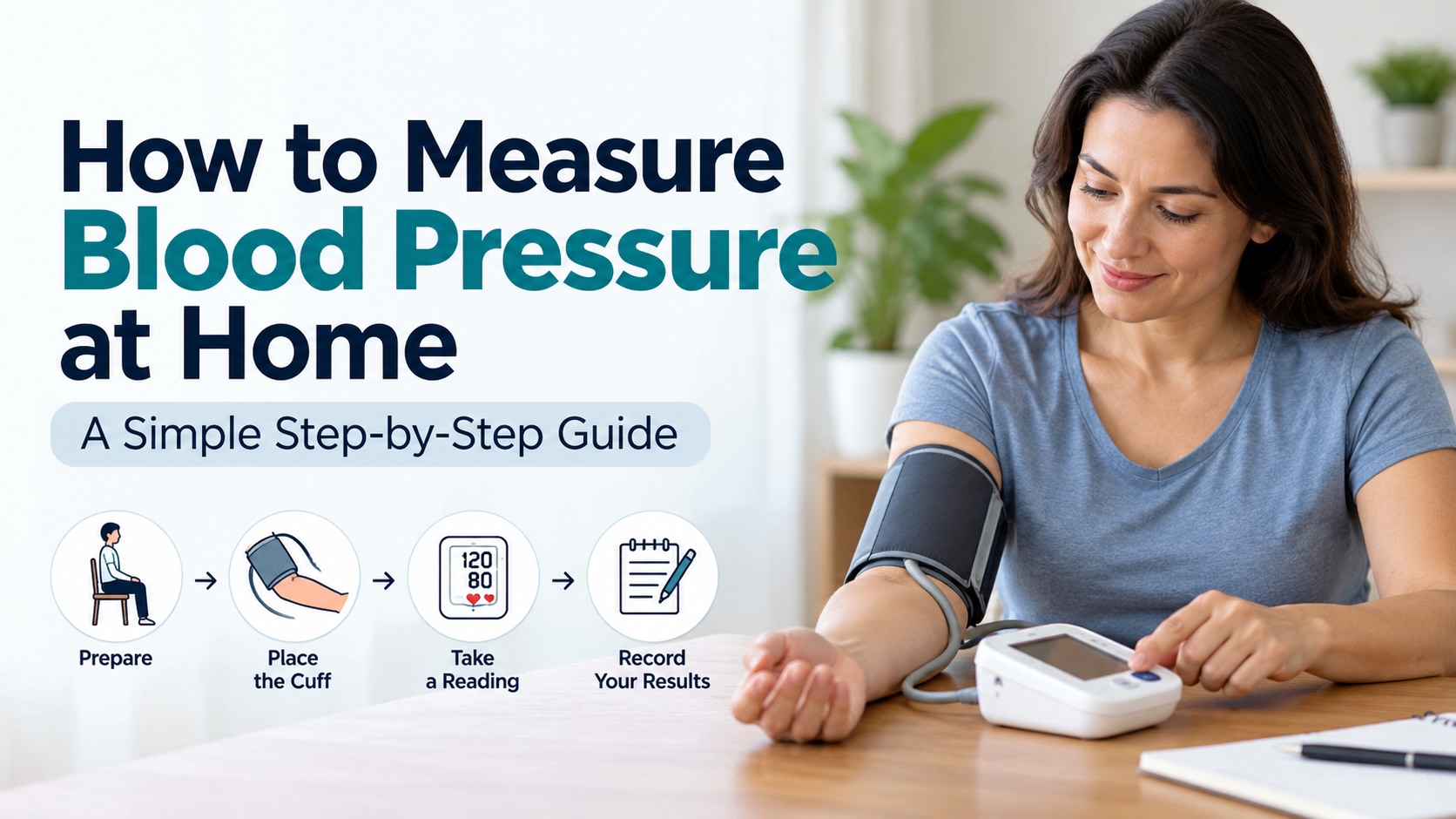
Learning how to measure blood pressure at home can help you keep a closer eye on your health between medical visits. Home readings can also show patterns that may not appear during a single appointment. To get useful results, you need the right monitor and a simple routine that you follow each time. Small things such as your sitting position, cuff size, or recent activity can affect the numbers.
This guide explains how to prepare, place the cuff correctly, take a reading, and record your results. It also covers common mistakes, how often you may need to check your blood pressure, manual readings, and signs that may need medical help. The advice follows current guidance from major health organizations. Your doctor may give you different instructions based on your own health needs.
What the Blood Pressure Numbers Mean
A blood pressure result has two numbers and may look like 120/80 mm Hg. The top number is called systolic pressure. It shows the pressure in your arteries when your heart pumps blood. The bottom number is called diastolic pressure. It shows the pressure when your heart relaxes between beats. Blood pressure can rise and fall during the day, so one reading only shows what was happening at that moment.
A group of readings often gives a clearer picture than one result. Stress, exercise, caffeine, pain, illness, and some medicines can affect blood pressure for a short time. Home monitoring can help a healthcare professional see how your blood pressure behaves during normal daily life. It may also help show whether treatment is working. However, home readings do not replace medical appointments or a professional diagnosis.
Choose the Right Home Blood Pressure Monitor and Cuff
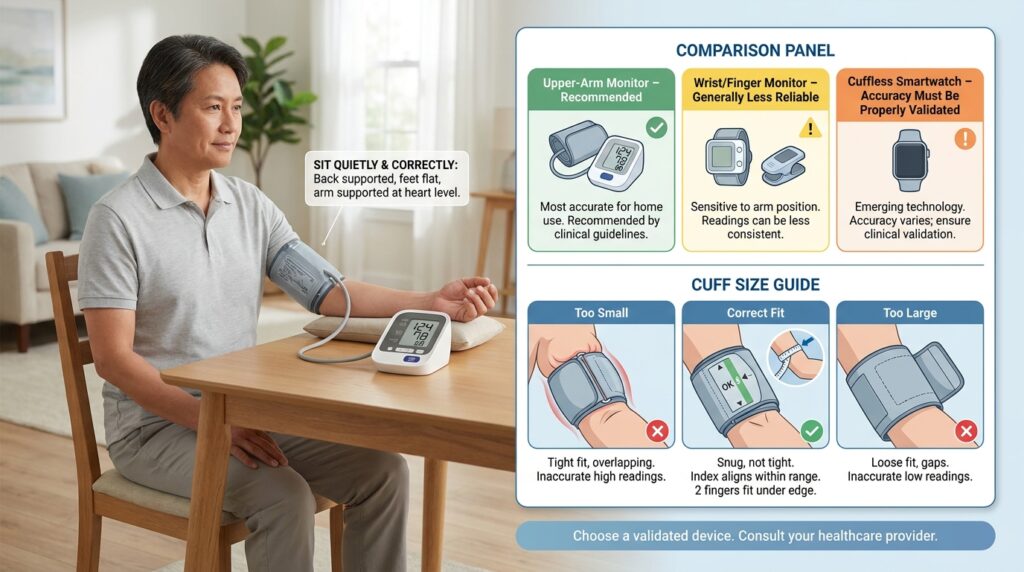
For most adults, an automatic upper-arm monitor is a good choice for home use. The American Heart Association recommends a validated monitor that uses a cuff around the upper arm. Wrist and finger monitors are usually less reliable. Current U.S. guidance also says cuffless devices, including some smartwatches, should not be used for diagnosis or treatment unless their accuracy has been properly proven.
The cuff must also fit your arm correctly because the wrong size can affect your reading. Measure around your upper arm and compare the result with the size range given by the monitor maker. A cuff that is too small or too large may give an inaccurate result. If possible, choose a monitor that has passed an independent accuracy check. In the United States, the ValidateBP list includes devices reviewed against accepted validation standards.
Prepare Before Taking a Reading
Good preparation starts before you put the cuff on your arm. Try not to smoke, drink caffeine, or exercise for at least 30 minutes before the test. Empty your bladder first, then sit quietly for at least five minutes. During this time, avoid talking, moving around, or using your phone. These simple steps can reduce short-term changes that may affect the reading.
Sit in a chair that supports your back and keep both feet flat on the floor. Do not cross your legs. Rest the arm you are using on a table or another firm surface so the upper arm stays close to heart level. Put the cuff directly on bare skin rather than over clothing. Try to take your readings in a similar setting each time because this makes them easier to compare.
How to Measure Blood Pressure at Home Correctly
Wrap the cuff around your bare upper arm so it feels secure but not painfully tight. Follow the markings or instructions that came with your monitor. In many cases, the lower edge of the cuff sits just above the bend of the elbow. Rest your arm on a table, keep your hand relaxed, and stay still. Once you are comfortable, start the monitor and avoid talking or moving while the cuff inflates and releases.
When the first reading is complete, write down both numbers. Wait at least one minute before taking another reading. Major guidelines often recommend two readings at each sitting because repeated results can give a more useful picture. Record the exact numbers instead of rounding them up or down. If your doctor has given you a different routine, follow those instructions instead.

How Often to Check and Record Your Blood Pressure
How often you should check your blood pressure depends on why you are monitoring it. Some people only need occasional readings, while others may be asked to measure it for several days. NICE guidance for confirming high blood pressure uses two readings taken at least one minute apart. These checks are usually done twice a day, ideally once in the morning and once in the evening.
For this type of monitoring, NICE recommends checking blood pressure for at least four days and ideally seven days. The first day’s readings are not included when the remaining average is calculated. Other healthcare systems or doctors may use a different plan, so follow the instructions given to you. Keep a clear record of the date, time, and both readings so a healthcare professional can review the pattern.
Common Mistakes That Can Change Your Reading
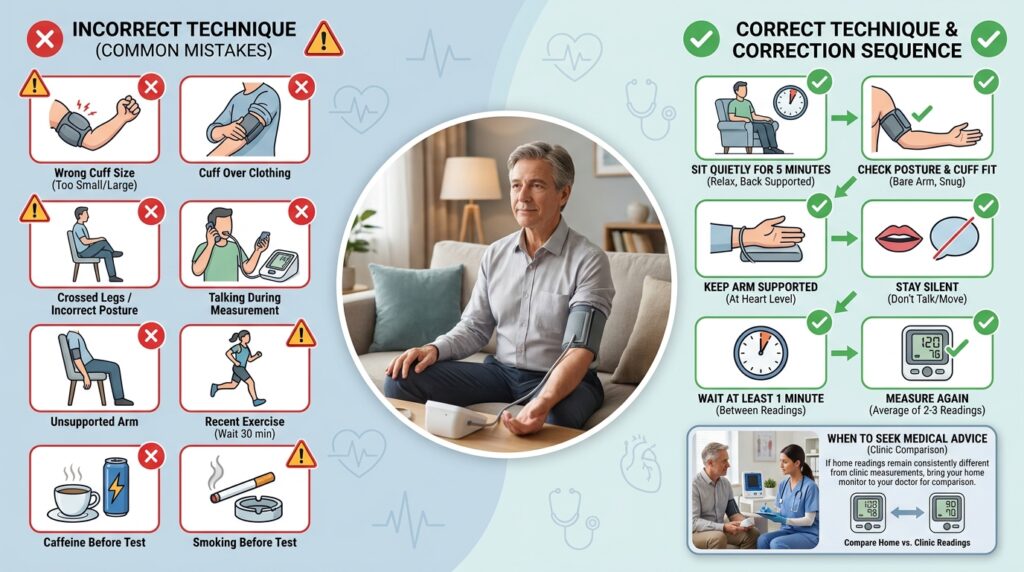
Several common mistakes can make a blood pressure result higher or lower than it really is. Using the wrong cuff size is one of the most common problems. Taking a reading over clothing, crossing your legs, talking during the test, or leaving your arm unsupported can also affect the result. Exercise, caffeine, and smoking shortly before the test may make the reading harder to compare with your usual numbers.
If a result looks unusual, check your technique before becoming too concerned. Sit quietly again for five minutes, make sure your posture is correct, and check that the cuff fits properly. Then take another reading after at least one minute. If your home readings stay very different from the numbers taken at a clinic, take your monitor to an appointment. A healthcare professional can check your technique and compare your monitor with their equipment.
What Your Home Blood Pressure Readings May Mean
Blood pressure limits are not exactly the same in every country or medical guideline. In the United States, the American Heart Association lists blood pressure below 120/80 mm Hg as normal for adults. A systolic reading of 130 to 139 or a diastolic reading of 80 to 89 is classed as stage 1 hypertension. A reading of 140 systolic or 90 diastolic and above falls into stage 2.
UK guidance uses a different level for home readings. The NHS says home blood pressure is usually considered high at 135/85 mm Hg or above. NICE also uses an average home result of 135/85 mm Hg or higher when confirming high blood pressure after a raised clinic reading. This is why you should not judge your health from one online chart alone. Follow the targets and limits given by your own healthcare professional.
Can You Measure Blood Pressure Manually or Without a Machine?
Blood pressure can be measured manually, but you still need the right equipment. A manual setup usually includes an arm cuff, pressure gauge, squeeze bulb, and stethoscope. The person taking the reading listens for blood flow sounds while slowly releasing pressure from the cuff. This method needs practice, good technique, and careful listening, so it is not usually the easiest option for routine home checks.
There is no reliable way to measure your actual blood pressure at home without a suitable device. Feeling your pulse cannot tell you your systolic and diastolic pressure. A phone app or smartwatch should not be treated as a replacement unless it has been properly validated for blood pressure measurement. For most people, a validated automatic upper-arm monitor is the simplest way to get regular and repeatable readings at home.
When to Get Medical Help
One high reading does not always mean there is an emergency. If your blood pressure is much higher than expected, stay calm and repeat the test after at least one minute. The American Heart Association says a reading above 180/120 mm Hg should be checked again. If the second reading remains that high but you do not have serious new symptoms, contact a healthcare professional promptly for advice.
Very high blood pressure can need emergency care when serious symptoms are also present. These symptoms may include chest pain, shortness of breath, weakness, numbness, vision changes, back pain, or trouble speaking. If your blood pressure is above 180/120 mm Hg and you have these symptoms, seek emergency medical help. People who are pregnant should follow the blood pressure advice given by their maternity team because pregnancy needs special medical assessment.
Frequently Asked Questions
Which arm should I use for home blood pressure checks?
Many people can use either arm, but your doctor may tell you to use a specific one. NICE advises checking both arms when blood pressure is first assessed. If the difference between the arms stays above 15 mm Hg after repeated checks, later readings should normally be taken from the arm with the higher result.
Why is my first blood pressure reading often higher?
The first reading may be affected by recent movement, stress, or not resting long enough before the test. This is one reason many home monitoring plans use two readings taken at least one minute apart. Looking at a pattern over several readings is usually more useful than reacting to one number.
Should I take blood pressure before or after medicine?
The right timing depends on why you are checking your blood pressure and which medicines you take. Some doctors may want readings before your medicine, while others may suggest a different schedule. Do not stop, change, or adjust blood pressure medicine because of home readings unless a healthcare professional tells you to do so.
Can stress make my home blood pressure higher?
Yes, stress can temporarily affect blood pressure. Pain, illness, caffeine, exercise, and smoking can also change the numbers for a short time. If you feel rushed or upset, sit quietly before taking a reading. Results taken under similar conditions are usually easier to compare.
Can I use a wrist blood pressure monitor?
A validated wrist monitor may be useful if an upper-arm cuff cannot be used properly. However, upper-arm monitors are generally preferred for routine home use. Wrist devices are more sensitive to position, so the wrist needs to stay at heart level while the reading is taken.
How can I tell if my home monitor is accurate?
Start with a validated device and make sure the cuff fits your arm correctly. You can also take the monitor to a medical appointment and ask the healthcare team to compare it with their equipment. It is also a good idea to follow the maker’s instructions for checks, care, and replacement.
Final Thoughts
Knowing how to measure blood pressure at home mainly comes down to using the same careful routine each time. Choose a validated upper-arm monitor, use the correct cuff size, and prepare before every reading. Sit with your back supported, keep your feet flat on the floor, and rest your arm at heart level. Take two readings at least one minute apart and keep a record when your healthcare professional asks you to monitor your blood pressure.
Try not to focus too much on one unusual result because blood pressure naturally changes during the day. A group of readings is usually more useful than a single number. Share your record with a healthcare professional if your results stay outside your target range. If you have a very high reading together with serious symptoms, seek urgent medical help.
Disclaimer
This article is for general information and was written with AI assistance. Medical advice, blood pressure targets, and guidelines may change, and this information may not cover every situation. It does not replace diagnosis or treatment from a qualified healthcare professional. Check important or current details with a doctor, pharmacist, official health service, or another trusted medical source before relying on them.