
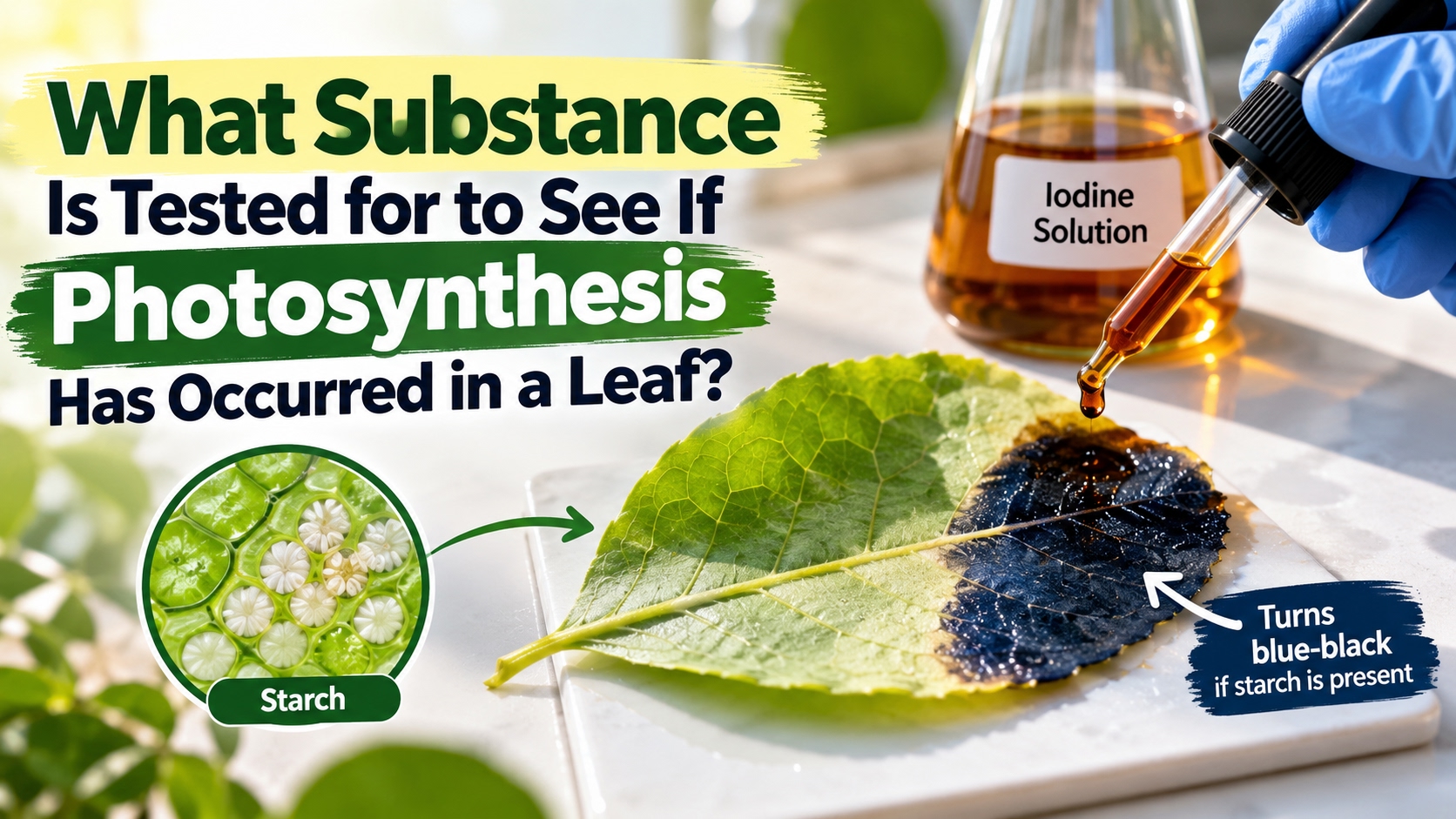
What substance is tested for to see if photosynthesis has occurred in a leaf? The substance tested is starch. During photosynthesis, a leaf makes sugars, and some of this food can be stored as starch. Scientists and students use iodine solution to check whether starch is present. If starch is found, the tested area turns blue-black. This color change gives useful evidence that photosynthesis has taken place in the leaf.
This test is common in school biology because starch is easy to detect. It also helps students understand why light and chlorophyll are important for photosynthesis. To get a clear result, the leaf must be prepared before iodine is added. The green color is usually removed so the final color change is easier to see. This guide explains how the starch test works, what each step means, and which mistakes can affect the result.
What Substance Is Tested for in a Leaf?
The direct answer is starch. Iodine solution is used to test whether starch is present in the leaf. If starch is there, the leaf turns blue-black. If starch is not present, the iodine keeps its normal brownish color. This is why the experiment is often called the starch test when students are checking whether photosynthesis has happened in a leaf.
Starch is a carbohydrate made from many glucose units. Plants can turn some of the sugars made during photosynthesis into starch for storage. Starch is useful in this experiment because it can stay inside leaf cells instead of moving away quickly. Finding starch therefore gives evidence that the leaf has made enough carbohydrate to store some of it. The test is more useful when the plant has been destarched first, because old starch may still be present from earlier photosynthesis.
Why Is Starch Tested Instead of Glucose?
Photosynthesis makes carbohydrates by using light energy, carbon dioxide, and water. In basic biology, glucose is often shown as one of the main products of this process. However, glucose is not usually the substance tested in the leaf experiment because it can be used by the plant or moved to other parts. Extra carbohydrate can be changed into starch and stored inside the leaf, which makes starch easier to test.
This difference is important in school questions. The question asks what substance is tested for, not what substance photosynthesis produces first. The correct answer is starch, while iodine is the chemical used to test for it. These two ideas are sometimes confused. Iodine is not made during photosynthesis. It is only added to the prepared leaf so that the presence of starch can be seen.
How Does the Iodine Test for Starch Work?
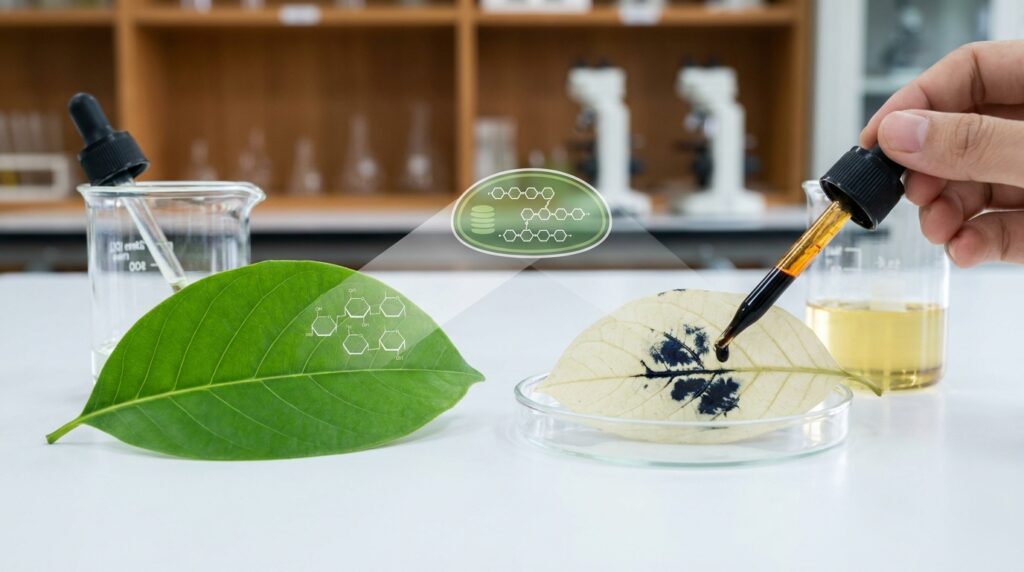
Iodine gives a clear color change when starch is present. After a leaf has been prepared, areas that contain starch turn blue-black when iodine is added. Areas without starch do not turn blue-black and usually keep the brownish color of the iodine. The same basic iodine test is also used to check foods for starch. The strong color difference makes the result fairly easy to see.
A fresh green leaf cannot simply be covered with iodine and checked straight away. Chlorophyll gives the leaf its green color, and this can make the result difficult to see. The leaf is first placed in hot water and then treated with hot ethanol to remove much of the chlorophyll. This makes the leaf much paler. It is then rinsed and placed on a light-colored surface before iodine is added, which makes any blue-black areas easier to identify.
How to Test a Leaf for Photosynthesis
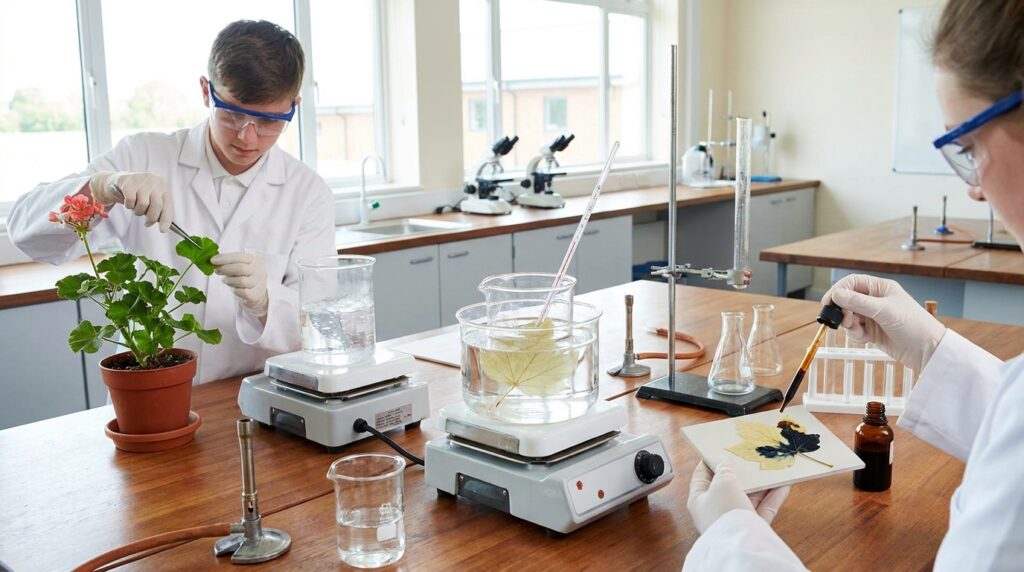
The experiment starts with a leaf from the plant being tested. In a controlled investigation, the plant is often kept in darkness before the experiment so that it uses up much of its stored starch. This is called destarching. After the plant has been given the required light treatment, a leaf is removed and placed in hot or boiling water. This kills the leaf and helps prepare the tissue for the next steps of the test.
The leaf is then heated in ethanol using a hot-water bath until much of the green color has disappeared. Ethanol should not be heated directly over a flame because it is highly flammable. After this step, the pale leaf is rinsed in water, spread out on a white tile or dish, and covered with iodine solution. If parts of the leaf turn blue-black, starch is present there. Areas that do not turn blue-black do not show starch in the test. Normal laboratory safety steps, including eye protection, should be followed.
What Do the Results Tell You About Photosynthesis?
A blue-black result shows that starch is present in that part of the leaf. In a well-controlled experiment using a destarched plant, this gives evidence that photosynthesis occurred there during the test period. For example, one part of a leaf can be covered so that it receives no light. After the plant has been left in the light, the uncovered area should contain starch, while the covered area should not. This helps show that light is needed for starch production during photosynthesis.
A variegated leaf can also be used to show why chlorophyll matters. These leaves have green areas that contain chlorophyll and pale areas that contain little or no chlorophyll. After the leaf has been properly prepared and exposed to light, the starch pattern should mainly match the green areas. Similar experiments can be used to study the need for carbon dioxide. These tests help students connect the starch result with the conditions needed for photosynthesis instead of only memorizing the color change.
What the Starch Test Can and Cannot Prove
The starch test gives indirect evidence of photosynthesis. It does not measure photosynthesis directly, and it does not show the exact amount of sugar the leaf has made. A blue-black result only confirms that starch is present in the tested tissue. In a carefully controlled experiment, that starch can be linked to photosynthesis during the test period. If the plant was not destarched first, some of the starch may have been stored before the experiment began.
The test is also mainly qualitative, which means it shows whether starch is present rather than giving an exact measurement of the photosynthesis rate. A darker area does not automatically mean that photosynthesis happened faster. Things such as leaf thickness, iodine contact, and how well the chlorophyll was removed can affect the appearance of the result. If the aim is to measure the rate of photosynthesis, other methods can be used to study changes such as oxygen production or carbon dioxide use.
Common Mistakes and Troubleshooting
One common mistake is testing a leaf that already contained stored starch before the experiment. This makes it harder to know whether the starch was made during the test period. Destarching the plant gives the experiment a clearer starting point. Poor light exposure can also affect the result. If the plant does not receive enough useful light, it may make little starch. Covered parts of the leaf must also block light properly, because light entering around loose paper or foil can make the result less clear.
Problems can also happen during leaf preparation. If chlorophyll is not removed properly, the green color may hide the blue-black result. If the leaf is not softened and prepared well, iodine may not reach the tissue evenly. Safety is also important during the ethanol step. Ethanol should be heated in a hot-water bath and kept away from flames. Iodine can stain, and hot liquids can cause burns, so students should follow their teacher’s or laboratory’s safety instructions.

Frequently Asked Questions
What is the substance tested for after photosynthesis?
The substance is starch. Plants can store some of the carbohydrate made from sugars produced during photosynthesis as starch. Testing for starch gives a simple way to look for evidence that the leaf has made and stored food.
What chemical is used to test a leaf for starch?
Iodine solution is used to test for starch. If starch is present, the iodine causes a blue-black color change. Starch is the substance being tested for, while iodine is the chemical used to carry out the test.
Why is the leaf boiled in water first?
The leaf is placed in hot or boiling water to kill it and help soften the tissue. This step also helps prepare the cells so that chlorophyll can be removed and iodine can reach the leaf tissue more easily later in the experiment.
Why is ethanol used in the leaf starch test?
Ethanol is used to remove chlorophyll from the leaf. Removing the green pigment makes the iodine color change much easier to see. Since ethanol is flammable, it should be heated using a hot-water bath rather than over an open flame.
Does a blue-black leaf prove photosynthesis happened at that exact moment?
No. A blue-black result shows that starch is present in the leaf tissue. To connect that starch to a certain period of photosynthesis, the experiment should control the starting conditions. This is why the plant is often destarched before the test begins.
Can this experiment show that light is needed for photosynthesis?
Yes, when the test is set up properly. A destarched leaf can have one area covered while another area is left in the light. After the starch test, the exposed area should contain starch, while the covered area should not. This provides evidence that light is needed for photosynthesis.
Final Thoughts
So, what substance is tested for to see if photosynthesis has occurred in a leaf? The answer is starch. Iodine solution is used to test for it, and a blue-black color shows that starch is present. The test works because plants can store some of the carbohydrate made during photosynthesis as starch, which makes it useful for simple leaf experiments.
Clear results depend on good experimental preparation. Destarching gives the plant a better starting point, while proper light exposure helps show where photosynthesis can happen. Removing chlorophyll makes the final color easier to see. When these steps are followed carefully, the starch test can clearly show how light and chlorophyll are linked to photosynthesis.
Disclaimer
This article is for general educational information and was written with AI assistance. Science teaching methods and safety guidance may change or differ between schools. It may not cover every laboratory situation, so students should follow their teacher’s instructions and trusted science guidance before carrying out any practical experiment.