
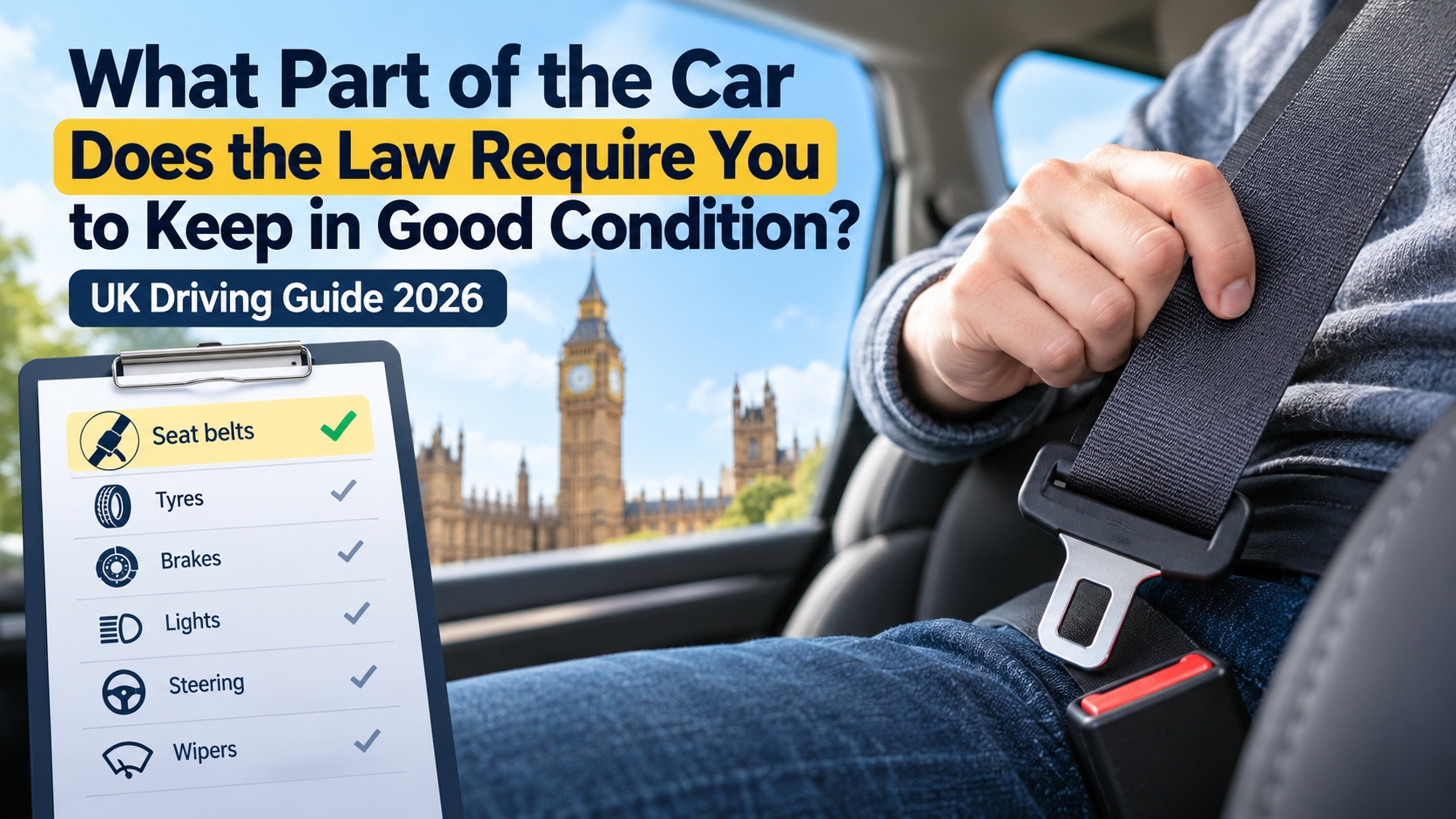
If you are preparing for the UK theory test, you may see the question, “what part of the car does the law require you to keep in good condition?” The correct answer is the seat belts. This is usually the expected answer when the options include parts such as the gearbox, transmission, door locks, and seat belts. Seat belts are important safety equipment, so the law has clear rules about their condition and how well they work.
This answer is useful for the theory test, but drivers also need to understand the wider rules. You are responsible for making sure your vehicle is safe and roadworthy before you drive it. This includes checking important parts such as the tyres, brakes, lights, steering, windows, wipers, and seat belts. This guide explains why seat belts are the correct answer, what good condition means, and what else you should check before driving in 2026.
Why Seat Belts Are the Correct Theory-Test Answer
The Road Vehicles (Construction and Use) Regulations 1986 include rules about keeping seat belts in good condition. These rules cover the seat belt itself, its anchor points, fastenings, and adjustment parts. These parts must not have clear defects that could stop the belt from working properly during a crash. The buckle also needs to work as designed, while the belt webbing should not have serious cuts or damage that could weaken it.
This is why seat belts are the correct answer to this common theory-test question. Other parts, such as the gearbox, transmission, and door locks, are still important to the vehicle, but this question focuses on a specific legal duty linked to seat belts. A damaged seat belt may not protect a person properly in a collision. The MOT test also checks important seat-belt parts, including their condition, operation, and secure fitting.
What Good Condition Means for a Seat Belt
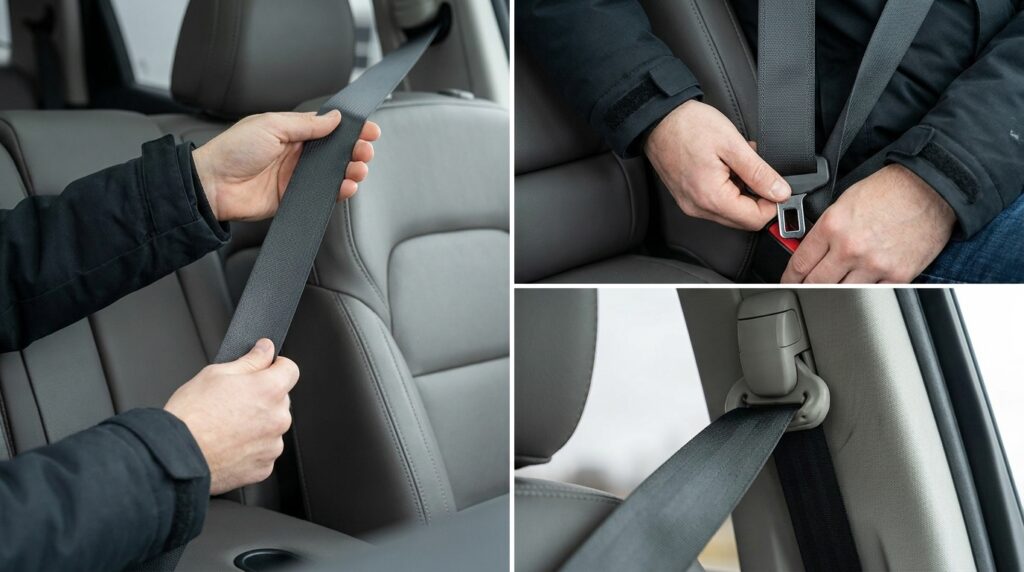
A seat belt should be secure, easy to use, and free from damage that could make it weaker. You should check the webbing for cuts, heavy fraying, stretching, or other clear signs of damage. The buckle should lock properly when you fasten it and release when you press the button. A retracting seat belt should also pull back smoothly when you let it go. Its anchor points should stay secure because they may take a lot of force during a collision.
You can carry out a simple check without using special tools. Slowly pull the seat belt out and look over the visible webbing. Fasten it, give it a gentle pull, and make sure the buckle stays locked. Then release it and check that the belt retracts as it should. If the belt sticks, will not fasten, fails to retract, or shows clear damage, do not ignore the problem. If you are unsure about its condition, ask a qualified garage to inspect it.
Seat-Belt Condition and Seat-Belt Use Are Different Rules
Keeping a seat belt in good condition is different from the rule about wearing one. The vehicle rule focuses on the belt itself, including the webbing, buckle, adjustment parts, and anchor points. Another rule says that people must normally wear a seat belt when one is fitted to the seat they are using. There are some legal exceptions, but they only apply in certain situations.
This difference is useful to remember when studying for the theory test. One question may ask whether the seat belt is in good condition, while another may ask who must wear one. You may also see questions about children and who is responsible for making sure they use the right restraint. Read each question carefully and focus on what it is asking. For belt condition, think about whether the seat belt can protect someone properly. For belt use, think about whether the person must wear it under the law.
The Law Also Requires Your Car to Be Roadworthy
Seat belts may be the answer to this theory-test question, but they are not the only part of the car that matters under the law. Drivers are responsible for making sure their vehicles are safe to use on the road. The Highway Code advises drivers to pay close attention to important parts such as the lights, brakes, steering, exhaust system, seat belts, demisters, wipers, washers, and warning devices. Your windows and windscreen should also give you a clear view of the road.
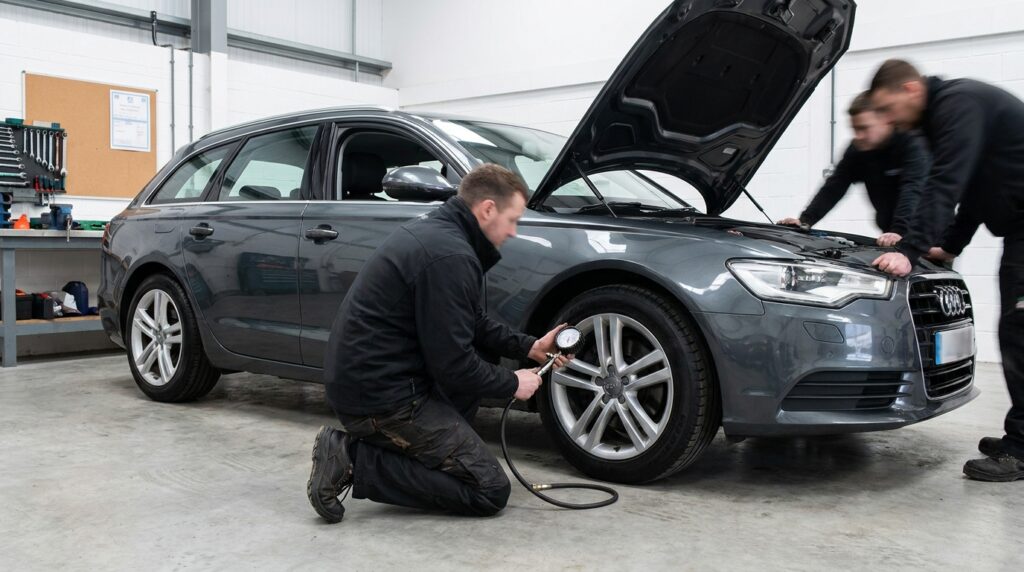
Tyres are another important example. Cars, light vans, and light trailers in Great Britain must normally have at least 1.6 mm of tread across the central three-quarters of the tyre. This tread must continue around the full tyre. Tyres should also be properly inflated for the vehicle and the load being carried. Northern Ireland has its own road traffic and vehicle testing system, but drivers there must also keep their vehicles roadworthy.
A Valid MOT Does Not Remove Your Responsibility
Some drivers think that a valid MOT means their car will stay safe until the certificate expires. This is not correct. An MOT only shows that the vehicle met the required standards when it was tested. A problem can appear soon after the test or several months later. This means a car can still become unsafe even when it has a valid MOT certificate.
The driver remains responsible for the condition of the vehicle each time it is used. This is why you should not rely only on the MOT test. You should continue checking the car and dealing with faults when they appear. Driving a vehicle in a dangerous condition can lead to serious penalties, depending on the problem and the situation. Regular checks between MOT tests can help you find small problems before they become more serious.
Simple Checks to Make Before You Drive
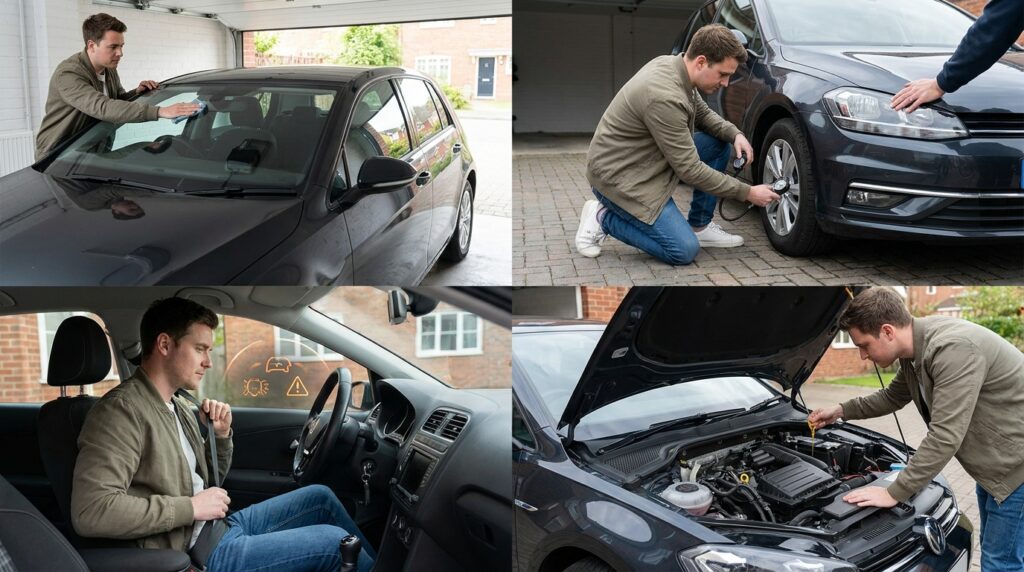
A quick check before driving can help you spot common safety problems. Start by checking that the windscreen and mirrors are clean and that nothing blocks your view. Make sure the main lights are working and pay attention to how the brakes feel. Walk around the car and look for obvious tyre damage or a tyre that appears to be low on air. You should also check the seat belts if you notice fraying, poor retraction, a weak buckle, or another clear problem.
You should also follow the service and maintenance advice in your vehicle handbook. This can help you know when to check engine oil, coolant, brake fluid, washer fluid, battery condition, and tyres. Warning lights should not be ignored because they may point to a fault that needs attention. If your car starts pulling to one side during braking, makes a new unsafe noise, or shows a serious warning, get it checked as soon as possible.
Frequently Asked Questions
Are rear seat belts covered by the law too?
Yes. Rear seat belts that are fitted to the vehicle must also work properly. In Great Britain, people must normally wear a seat belt when one is fitted, although there are limited exceptions. Drivers also have responsibilities when children are travelling in the vehicle, including making sure they use the correct restraint where required.
Can a damaged seat belt cause an MOT failure?
Yes. A damaged or faulty seat belt can cause an MOT failure. Problems may include seriously damaged webbing, a buckle that does not work properly, a faulty retractor, or a loose anchor point. Some defects can be classed as major, while more serious faults may be classed as dangerous.
Is a small cut in seat-belt webbing always acceptable?
No. Even a small cut can matter depending on where it is and how much it weakens the belt. Damage close to the edge of the webbing can be especially important because it may reduce the strength of the belt. If you notice a cut, do not simply assume the belt is safe. Ask a qualified repairer to check it if you are unsure.
Does each passenger need their own seat belt?
In Great Britain, one person should use each seat that has a seat belt. A seat belt should not be shared by two people. This rule still matters on short journeys. Children may also need an approved child car seat, depending on their age, height, and the situation.
Do all old cars have to be fitted with modern seat belts?
Not always. Seat-belt fitting rules can depend on when the vehicle was first used and how it was built. Some older vehicles are covered by different requirements from newer cars. However, if a seat belt is fitted or legally required, it should still be kept in proper condition and work correctly.
Are seat-belt pretensioners and warning systems checked during an MOT?
Yes, some restraint-system parts can be included in the MOT test where the rules apply. This may include seat-belt pretensioners, load limiters, and warning lights linked to the restraint system. A pretensioner helps tighten the seat belt during a collision, while a warning light may show that there is a problem with the system.
Final Thoughts
For the theory-test question “what part of the car does the law require you to keep in good condition?”, the answer to remember is seat belts. The law includes clear rules about the condition of the belt, buckle, webbing, adjustment parts, and anchor points. These parts also form part of the MOT checks because a damaged seat belt may not protect someone properly in a collision.
For everyday driving, you should think about the condition of the whole vehicle, not only the seat belts. Your tyres, brakes, lights, steering, windows, wipers, and other safety parts should also be kept in good working order. Check your car regularly, deal with faults as soon as possible, and use official guidance when you are unsure about a legal or safety requirement.
Disclaimer
This article is for general information and was written with AI assistance. Vehicle laws, MOT rules, and official guidance can change over time. This guide may not cover every vehicle or situation, so check current official or trusted sources before relying on important legal or safety information.