
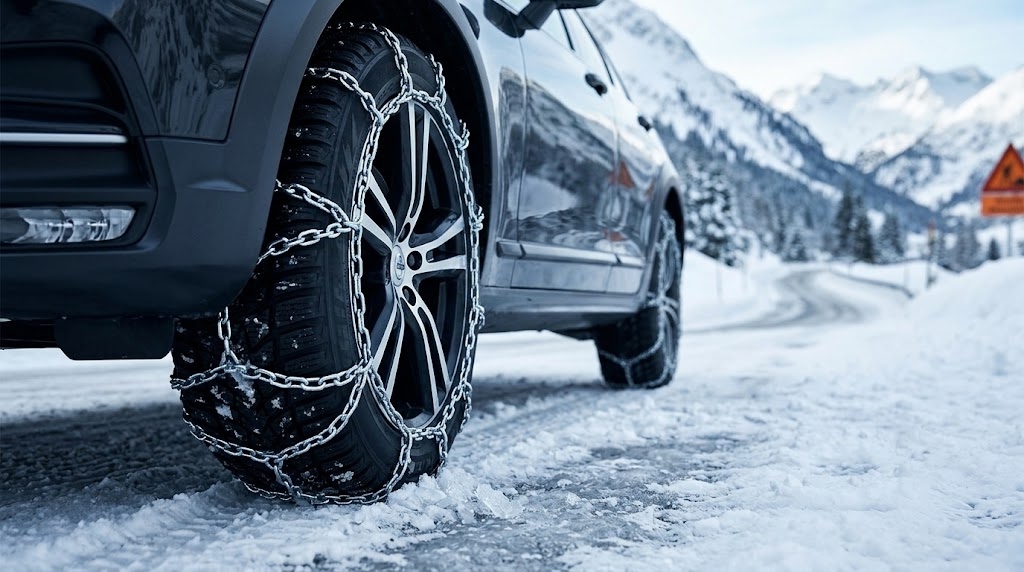
Why would you fit chains to your wheels? The short answer is grip. Snow and ice make roads slippery, and normal tyres can slide or spin. Chains add metal links that bite into the surface. This helps your car move, turn, and stop with more control. Many drivers never need them. Drivers who cross snowy mountains often do. Knowing when and how to use chains can keep a winter trip calm and safe. A little planning before you leave makes a big difference.
This guide explains how chains work and when to use them. You will learn which wheels need them and how to fit them step by step. We also cover common mistakes, driving tips, and rules to check before you travel. You will see how chains compare with snow tyres and snow socks. By the end, you will know if chains suit your trip. You will also know what to do if something goes wrong on the road.
What Tyre Chains Are and How They Work
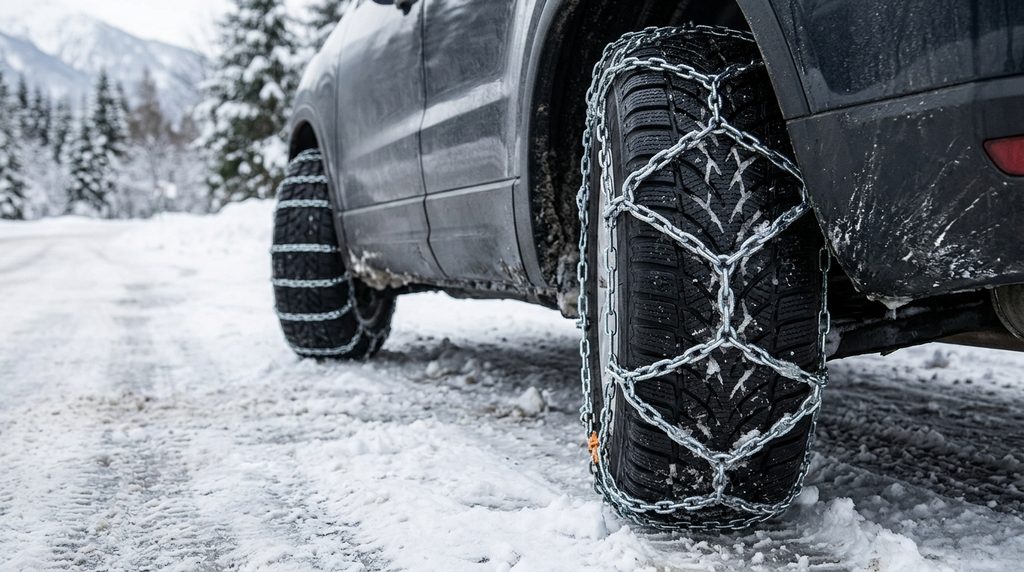
Tyre chains are sets of metal links that wrap around the tread of a tyre. Some look like a ladder. Others use a diamond pattern across the tread. You fit them over the tyre when the road is covered in snow or ice. Many sets are made of steel. Some use other tough materials. Chains come in different sizes, so each set fits certain tyres only.
A normal tyre grips the road with rubber. On packed snow or ice, that rubber slides. Chains add hard edges that dig into the surface. This gives the tyre something to hold. Think about walking on an icy path in smooth shoes. Now picture boots with small spikes. The spikes give you grip where smooth soles cannot. Chains do the same job for your car. They do not stop every slide, but they give your tyres a better chance.
Why Would You Fit Chains to Your Wheels in Winter?
The main reason is traction. Traction is the grip between your tyre and the road. When traction drops, your car may not move forward, turn, or stop well. Chains help bring back some of that grip on deep snow and ice. They can help you climb a steep hill. They can also help you slow down more safely on the way back down. This is why many mountain drivers keep a set in the boot.
A second reason is the rules. In some places, you must carry chains or fit them in certain conditions. Road signs often tell you when this applies. A third reason is simple. Chains can stop you from getting stuck and blocking the road. Imagine a mountain road after heavy snow. A driver with chains may keep moving while others wait. Always check local rules before you travel, because they differ by place.
When You Should Put Chains On
Use chains when the road has snow or ice that your tyres cannot grip. Signs near mountain roads often warn you. Some roads have a checkpoint where officers check your chains. You may also feel the car slip. You may hear the wheels spin, or see other cars struggle. These are clear signals to stop and fit your chains. Do it in a safe place, not on a narrow bend.
Do not wait until you are stuck. Fitting chains on a steep, snowy slope is hard and risky. It is much easier at a wide, flat pull-off area. Check the weather and road reports before you leave. If conditions look bad, ask yourself if the trip is needed. Chains help, but they do not make a dangerous road safe. Slow down even with chains on, and be ready to turn back if the road gets worse.
Which Wheels Need the Chains
Chains usually go on the drive wheels. These are the wheels that push your car forward. On a front-wheel drive car, they go on the front. On a rear-wheel drive car, they go on the back. Four-wheel drive and all-wheel drive cars can differ. Some makers give clear advice for these cars. Your owner’s manual will tell you the right setup for your car.
Size matters too. Chains must match your tyre size. You can find the size printed on the side of the tyre. It looks like a set of numbers and letters. Some cars have very little space between the tyre and the body. Some makers say chains do not fit certain cars at all. In that case, the manual may suggest another traction aid. Never force a chain to fit. Buy chains before you need them, and test them at home.

How to Fit Chains Step by Step
Practise at home first. Fitting chains in a dry driveway is much easier than doing it in a storm. Steps differ by chain type, so follow the maker’s guide. Start by laying the chain flat and untangling it. Park on flat ground, turn off the engine, and use the handbrake. Place the chain over the tyre so it hangs evenly. Tuck it behind the tyre, then join the ends at the front. Pull each fastener snug until the chain sits close to the tread.
Next, drive forward a few metres. Stop and tighten the chain again. Chains often loosen after the first short drive. A loose chain can hit the car body and cause damage. Check them again after a few hundred metres. Wear gloves, because metal and wet snow are cold. A torch or head lamp helps at night. Keep a mat in the boot to kneel on.
Safe Driving Tips With Chains On
Drive slowly with chains on. Check the speed limit in the maker’s guide. It is usually low. Brake gently and take bends slowly. Sudden braking or sharp steering can make even a chained car slide. Keep your steering smooth and your speed steady. Avoid hard acceleration on slippery ground, because wheels can spin. Leave a bigger gap in front of you than normal. Listen for odd sounds, such as slapping or clanking. These sounds can mean a loose chain.
Take chains off when you reach clear road. Driving on bare tarmac wears out the chains. It can also harm the road surface and your tyres. Stop in a safe spot and remove them. Shake off the snow and let them dry. Wet chains can rust. Store them in the bag or box they came in. Check for broken links before your next trip.
Common Mistakes and Easy Fixes
One common mistake is buying the wrong size. Check your tyre size before you buy. Another mistake is fitting chains on the wrong wheels. The manual will show you the right ones. Many drivers also forget to tighten the chains after a short drive. Others wait until the last moment to learn how to fit them. A short practice session fixes this. It takes little time and saves a lot of stress.
If a chain hits the car body, stop and check it. It is often loose. If a link breaks, stop in a safe place and remove the chain. Do not keep driving on a broken chain. If the chains will not fit, do not force them. Look at other options, or turn back. Keep gloves, a torch, and the maker’s guide in your car. These small items can save you a long wait in the cold.
Chains, Snow Tyres, and Snow Socks
Chains are not the only choice. Snow tyres, also called winter tyres, use special rubber and tread made for cold weather. You do not fit them for each trip. Snow socks are fabric covers that slip over the tyre. Many people find them easier to fit than metal chains. They may wear out faster on hard surfaces. Check the maker’s advice for any product you pick.
Each choice suits a different driver. Someone in a snowy area may prefer snow tyres. A holiday driver who visits the mountains once a year may keep chains in the boot. Some places accept only certain products, so check the rules. Chains often give strong grip on deep snow and ice. Snow tyres help before the road gets bad. Some drivers use both for extra confidence.

Rules and Limits to Check in 2026
Rules about chains differ by country, region, and road. Some places ask you to carry them in winter. Others only ask for them when a sign says so. Some roads do not allow chains on bare surfaces. Rental cars may have their own rules. Read the rental agreement before you travel. Some companies may not allow chains at all. Ask the company before you buy a set.
Because rules change, check official sources before each trip. Road authority websites and local traffic services give current details. Your car’s manual also lists limits. Cars with little space around the tyre may not take chains. Insurance may also matter, so ask your insurer if you are unsure. Do not rely on old advice from forums or old posts. Rules and products can change from one winter to the next.
Frequently Asked Questions
Do chains work on wet roads?
Chains are made for snow and ice. On wet or bare roads, they add little and wear fast. They can also be noisy and rough on the ride. Take them off as soon as the road is clear and safe to stop.
Can I use chains on any tyre?
Not always. Chains must match your tyre size and fit your car. Check your manual before you buy. Some cars have too little space and cannot take chains. In that case, ask the maker or a local garage about other options.
Can chains damage my tyres or wheels?
A chain that fits well and sits snug should cause little trouble. A loose or wrong-size chain can scratch the wheel or rub the tyre. Check your manual for any warnings. Some chain sets are made for cars with tight space around the tyre.
Do I need chains if I have four-wheel drive?
Four-wheel drive can help you get moving. It does not give you extra grip when you brake on ice. Some rules still ask drivers to carry chains. Check local signs and your manual.
How long do chains last?
No set lasts forever. Life depends on the chain type, how far you drive, and the road surface. Look at the maker’s guide for care tips. Replace any set that looks worn or bent.
Can I fit chains by myself?
Many people can fit chains alone with practice. Some sets are easier than others. If you feel unsure, ask for help at a safe stop or a local garage. Never stand in traffic while you work.
Final Thoughts
So, why would you fit chains to your wheels? You do it to get grip on snow and ice when normal tyres cannot hold the road. Chains can help you climb, turn, and slow down in winter weather. They work best when they match your tyres and sit on the right wheels. They also work best at low speed on snowy or icy roads. Used well, they make a hard winter drive more manageable.
Your next step is simple. Check your car’s manual and your tyre size. Look up the rules for the roads you plan to use. Buy a set that fits, and practise fitting it at home. Then store it where you can reach it quickly. If the road looks too dangerous, wait or choose another day. Safe choices matter more than any gear.
Disclaimer
This article gives general information only. AI helped write it. Details about chains, rules, and products can change, and the article may not cover every situation. Please check important or current details with official or trusted sources before you rely on them. Always follow your car’s manual and local road signs.