
A sore throat can make anyone worry. You may wonder if it is a small cold or something that needs a doctor. Many people search for how to know if you have tonsillitis because the signs can look like other illnesses. Tonsillitis is common, and it often gets better on its own. Still, knowing the clues helps you choose the right next step.
This guide explains the main signs of tonsillitis in plain words. You will learn how to check your throat at home and what that check can and cannot tell you. You will also see how viral and bacterial cases differ, and which warning signs need quick care. The guide cannot diagnose you. It can help you decide when to rest at home and when to call a doctor.
What Tonsillitis Is
Tonsillitis means your tonsils are swollen because of an infection. The ending “itis” in a medical word means swelling. Tonsils are two soft lumps at the back of your throat, one on each side. They are part of your body’s defense system and help catch germs that enter through the mouth. Think of them as two guards at a door. When too many germs arrive, the guards can swell and hurt.
Tonsillitis is common in children and teens, but adults can get it too. Many cases come from viruses, the same kinds of germs that cause colds. Some cases come from bacteria, such as group A strep. The cause matters because antibiotics only work on bacteria. That is why a doctor may need to look at your throat before choosing a treatment.

The Main Signs of Tonsillitis
The most common sign is a sore throat. Swallowing often hurts, and the pain can feel sharp. You may also have a high fever, a headache, or an earache. Some people feel tired or sick to their stomach. Tonsillitis can feel like a bad cold or the flu, so the throat signs matter most.
Look for clues in the neck and mouth too. The glands on the sides of your neck may feel swollen and sore. Your tonsils may look red and large. Some people see white or yellow spots on them. Symptoms often get worse over two or three days and then ease. Many cases pass within a few days to a week, but some last longer.
A Simple Home Check in the Mirror
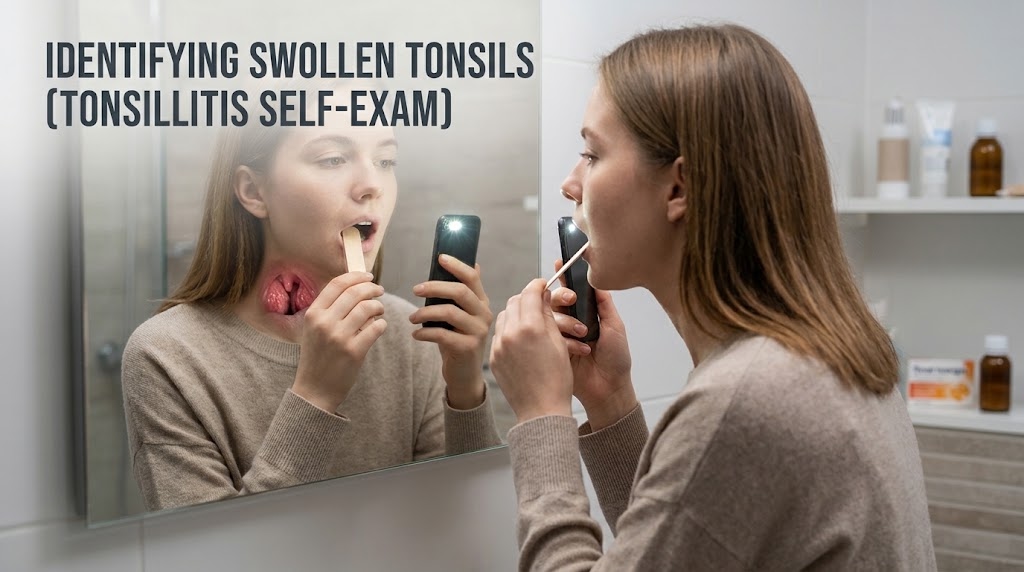
You can take a quick look at your throat. Stand near a window or use a phone flashlight. Open your mouth wide and say “ah.” Then look at both sides of the back of your throat. Healthy tonsils look pink and fairly small. Red, swollen tonsils, white spots, or a coating are clues.
This check has limits. Many throats look odd even when nothing serious is wrong. Some cases of tonsillitis also look quite mild. Never poke your throat with a spoon or finger, because this can cause gagging or injury. Do not force a child to hold their mouth open for long. Write down what you see and when the symptoms began. These notes can help a doctor later.
Viral or Bacterial? Clues That Help
Viral and bacterial tonsillitis can look alike. Still, some clues help. A cough, runny nose, hoarse voice, or red, watery eyes point more toward a virus. Age plays a part too. Strep is more common in school-age children than in toddlers. Strep throat tends to start fast with a very sore throat and fever. It often comes without a cough. One US health system says about 1 in 10 adults and 3 in 10 children with a sore throat have strep.
These clues are only a guide. Some people with a virus have no cough, and some people with strep feel only mildly ill. Only a throat swab test can confirm strep. This matters because antibiotics do not help a virus, and they can cause side effects. Untreated strep can sometimes lead to rare but serious problems. A doctor’s check is worth it when the signs point that way.

Signs in Babies and Young Children
Young children cannot always say what hurts. Watch for a fever, fussiness, and less interest in food or drink. A child may cry when swallowing or refuse favorite foods. Some children get a tummy ache or a headache. Many sore throats in children under five come from viruses, so a runny nose or cough is common.
Some signs need quick action. Contact a doctor or urgent health line fast if a child cannot swallow saliva or has trouble breathing. Do the same if a child is very sleepy and hard to wake. Seek help for signs of dehydration, such as few wet diapers or no tears. Do not give aspirin to children or teens unless a doctor says so. Ask a pharmacist or doctor about safe pain relief for your child’s age and weight.
Other Problems That Look Like Tonsillitis
A sore throat does not always mean tonsillitis. Colds, flu, and COVID-19 can all cause sore throats. Allergies, dry air, smoke, and acid reflux can also irritate the throat. These causes often come with other clues, such as sneezing, itchy eyes, or heartburn. A sore throat that lasts for weeks is less likely to be simple tonsillitis.
One more cause is glandular fever, also called mono. It mostly affects teens and young adults. It can cause a very sore throat, deep tiredness, and swollen neck glands that last longer than usual. A doctor may order a blood test if symptoms are severe or will not go away. Another rare problem is quinsy, a pocket of pus near a tonsil. It often brings strong pain on one side of the throat, so seek care quickly.
When to See a Doctor
Many cases of tonsillitis get better without treatment, so waiting a few days is often fine. See a doctor if symptoms do not start to improve after about four days. Local advice can vary, so follow your own health service’s guidance. Also book a visit if you keep getting sore throats, have very bad pain, or see pus on your tonsils. A pharmacist can often help with mild symptoms.
Get urgent help for warning signs. These include trouble breathing, a muffled voice, drooling, or being unable to swallow your own saliva. Also seek help for a stiff neck, a new rash, strong pain on one side, or signs of dehydration. Do not wait for these signs to pass on their own. If you are unsure, call your local emergency number or health helpline. Fast care matters more than a perfect guess about the cause.
How Doctors Confirm Tonsillitis
A doctor can often tell by asking about your symptoms and looking at your throat. They may also feel the glands in your neck. Sometimes they take a swab from the back of your throat. A rapid test or lab test can check for strep. Bring a list of your symptoms, how long they have lasted, and any medicines you take. The tests you can get depend on the clinic and the country.
If the swab shows bacteria, a doctor may prescribe antibiotics. In some places, doctors save antibiotics for severe or repeat cases. If a virus caused the illness, rest and fluids are the main care. Take antibiotics exactly as directed, and do not use leftover pills from an old illness. If tonsillitis keeps coming back, a doctor may talk about other options. These can include surgery to remove the tonsils.

Easy Ways to Feel Better at Home
Rest and fluids are the base of home care, and they cost almost nothing. Sip water, warm drinks, or broth, even if eating hurts. Soft foods like soup, yogurt, or mashed potatoes go down more easily. Adults may find that gargling with warm salty water helps. Throat lozenges can help adults and older children, but they are not right for very young children because of choking.
Pain relievers such as paracetamol (acetaminophen) or ibuprofen may ease pain and fever if they suit you. Follow the label, and ask a pharmacist if you take other medicines or have health conditions. Stay home while you feel unwell, and wash your hands often. Avoid sharing cups and utensils. Try to get extra sleep, because your body fights infection while you rest. Smoke can irritate the throat, so stay away from it. Ask your doctor when it is safe to go back to work or school.
Common Mistakes to Avoid
One common mistake is trusting white spots alone. Spots can show up with several illnesses, and some people with tonsillitis have none. Another mistake is expecting antibiotics for every sore throat. Many sore throats come from viruses, and these pills will not help. Comparing your throat to online photos can also mislead you, because lighting and camera angles change how a throat looks.
Other mistakes come from waiting too long. People sometimes ignore pain on one side or a muffled voice and hope it will pass. Parents may wait when a child will not drink. Some people go back to school or work as soon as the fever drops. Give your body time to recover, and ask a doctor when you are safe to return. Rest is part of the treatment, not a bonus.
Frequently Asked Questions
Is tonsillitis contagious?
It can be. Tonsillitis can spread through droplets from coughs and sneezes, and through shared cups or utensils. Staying home while you feel unwell helps protect others. If a doctor finds strep, ask when it is safe to return to school or work.
Can you have tonsillitis without white spots?
Yes. Some people have only red, swollen tonsils. White patches can also appear with other illnesses, so spots alone do not prove tonsillitis. Your other symptoms and a doctor’s exam give a clearer picture.
How long does tonsillitis last?
Symptoms often go away after three to four days, and many cases clear within a week. Some last longer. If you do not feel better after about four days, or you feel worse, speak with a doctor.
Can adults get tonsillitis?
Yes. It is more common in children, but adults can get it too. A severe case that will not go away in a teen or adult may lead a doctor to test for glandular fever.
Can I get tonsillitis after my tonsils are removed?
Without tonsils, you cannot have tonsillitis. You can still get other throat infections that cause a sore throat. A doctor can help find the cause if symptoms last or feel severe.
Can I test for strep at home?
Some places sell home strep test kits. Availability and accuracy can differ, so follow the label and check with a pharmacist. A home result may not give the full picture. A doctor can confirm the cause and guide treatment.
Final Thoughts
Knowing how to know if you have tonsillitis starts with a few simple clues. Look for a sore throat, painful swallowing, fever, swollen neck glands, and red or spotted tonsils. A cough or runny nose often points to a virus. A sudden, severe sore throat without a cough may point to strep. No home check can give a final answer.
Your next step depends on how you feel. For mild symptoms, rest, drink fluids, and watch how things change over a few days. See a doctor if you do not improve, if symptoms return often, or if a child seems very unwell. Get urgent help for trouble breathing or swallowing. When you are unsure, ask a pharmacist or doctor. A daily note of your temperature and symptoms can make that visit easier.
Disclaimer
This article is for general information only, and it was written with AI assistance. Health advice and local guidance can change. It may not cover every person or situation. It does not replace a doctor’s care. Please check important or current details with official or trusted health sources before you rely on them.