
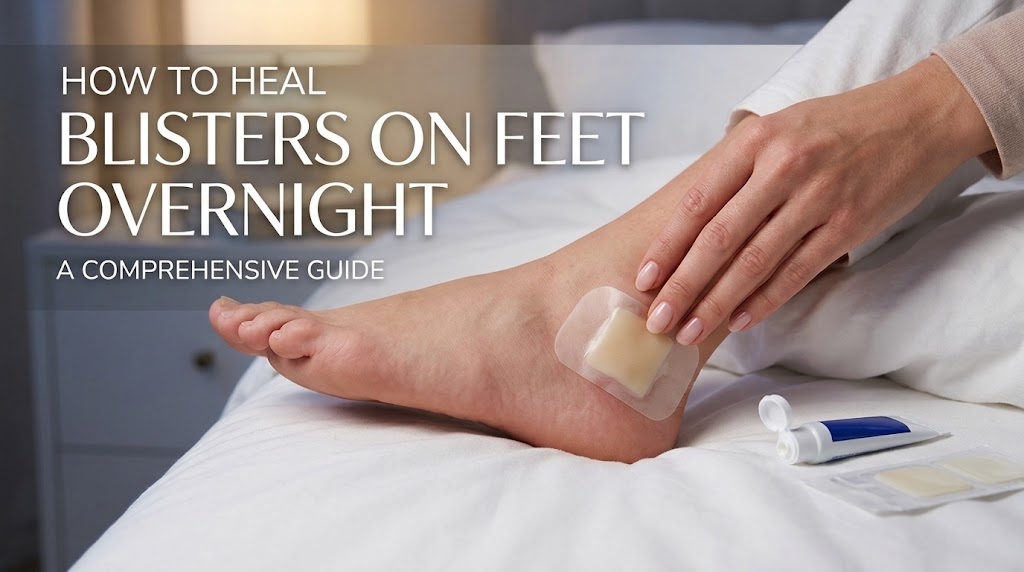
Waking up with a painful blister can ruin your day. Many people search for how to heal blisters on feet overnight because they need to walk, work, or train again soon. The hope is simple. You want the pain gone by morning. Real healing takes longer than one night, but good night care can help a lot.
This guide shows you what to do tonight, step by step. You will learn how to care for a blister that is closed and one that has popped. You will also learn when draining makes sense, which mistakes slow healing, and when to see a doctor. The advice follows general guidance from skin and foot health groups, such as the American Academy of Dermatology.
Can a Blister Really Heal Overnight?
Most small friction blisters need several days to heal. One night will not make the blister vanish. Still, a good overnight routine can ease pain and protect the skin. Think of a blister like a small water balloon over a scrape. The fluid cushions the raw skin underneath. Your goal is to keep that cushion safe while the skin below repairs itself.
Night is a good time to treat a blister because your feet rest. You are not rubbing the spot with shoes or socks. You can clean it, cover it, and leave it alone for hours. Many people feel less pain by morning if they remove pressure and keep the area clean. Be careful with any product that promises a full cure overnight. A blister heals at its own pace, and rushing it can cause harm.

What Is a Blister and Why Does It Form?
A blister is a bubble of fluid that forms under the top layer of skin. It often starts when skin rubs against a shoe or sock again and again. Heat and sweat can make the rubbing worse. Heels and toes are common spots. The body makes the fluid to protect the raw skin below.
The skin on top of the bubble is called the roof. It works like a natural bandage. Skin experts suggest you keep it in place when you can. This is why popping a blister is the most common way to slow healing. Healing time often runs from about one to two weeks, depending on the size of the blister and how you care for it.
Overnight Steps for a Blister That Is Still Closed
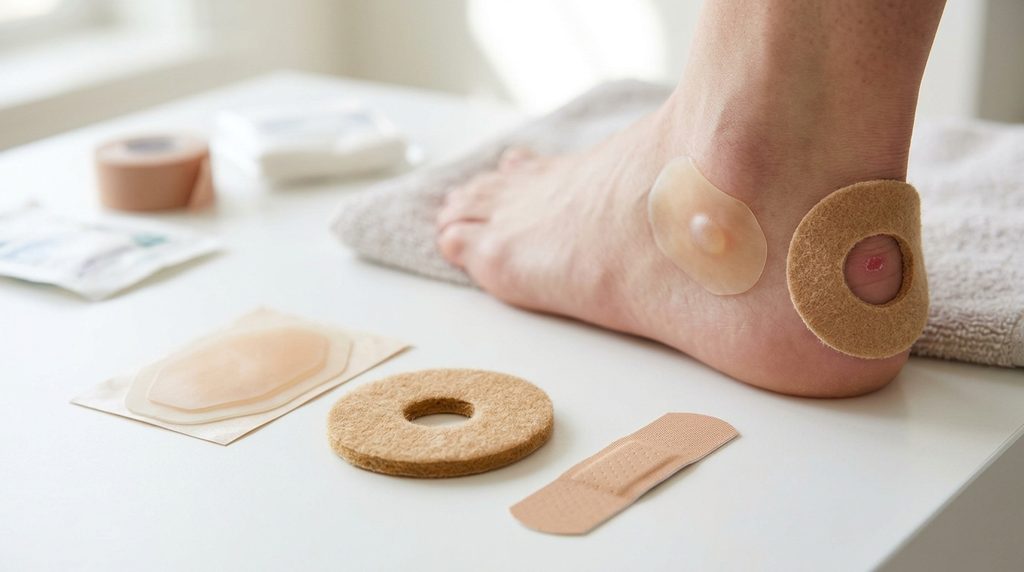
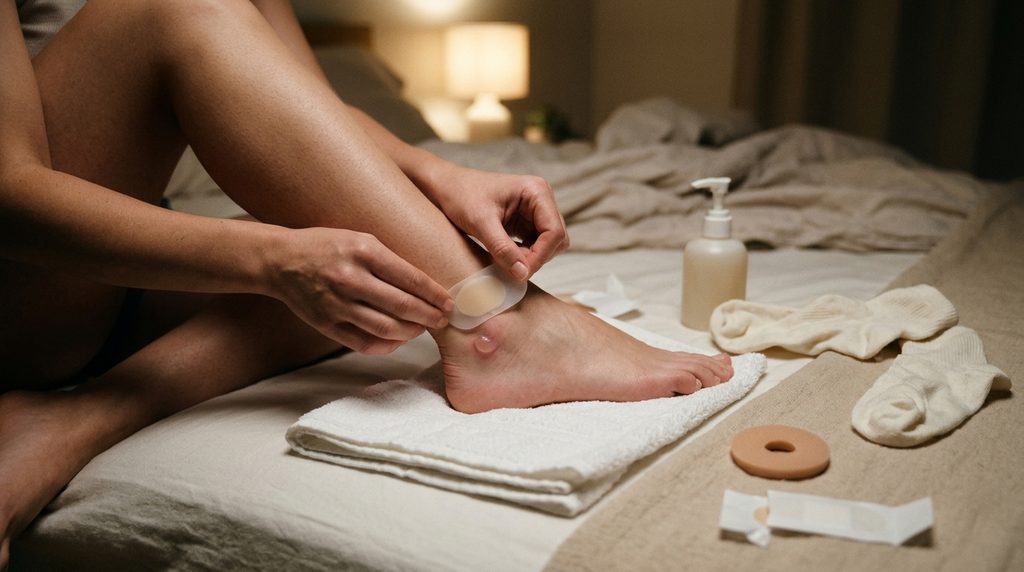
Start with clean hands. Wash the blister and the skin around it gently with mild soap and water. Pat the area dry with a clean towel. Do not scrub. Next, cover the blister loosely with a clean bandage. A hydrocolloid bandage is one good choice. It forms a soft gel layer that cushions the spot. You can also place a donut-shaped pad around the blister to take pressure off the middle.
Take off your shoes and rest your foot. If you wear socks to bed, pick soft and loose ones. Tight socks can press on the bandage and cause new rubbing. In the morning, check the area. Change the bandage if it is wet, dirty, or peeling. Keep the roof in place and avoid picking at it.
What to Do If the Blister Has Already Popped
Sometimes a blister breaks on its own. Do not panic. Wash your hands first. Then rinse the area with mild soap and water. Skip alcohol and hydrogen peroxide on the raw skin. They sting and may irritate the area. Leave the flap of skin in place. It still protects the tender skin under it.
Next, apply a thin layer of petroleum jelly and cover the area with a clean bandage. Some people use antibiotic ointment instead. A few people get a skin reaction from these ointments, so stop if a rash appears. Change the bandage once a day. Change it sooner if it gets wet or dirty. Look at the skin each time for signs of trouble.
When Draining a Blister Makes Sense
Skin experts say you should avoid popping a blister if you can. Draining adds a risk of infection. Still, a blister that is large and very painful may need drainage. A big blister on the sole can make walking hard. In that case, careful draining may bring relief. If you feel unsure, ask a doctor or pharmacist for help.
If you decide to drain it, wash your hands and the blister first. Clean a needle with rubbing alcohol. Gently pierce the edge of the blister and let the fluid come out. Do not cut off the roof. Then apply petroleum jelly and cover it with a clean bandage. Do not drain a blister that looks infected. See a healthcare professional instead.
How to Choose Bandages, Pads, and Moleskin
Different products do different jobs. A hydrocolloid bandage soaks up a little fluid and forms a gel that cushions the skin. A donut-shaped moleskin pad lifts pressure off the blister. A plain nonstick bandage also works well for small blisters. Pharmacies often sell all three. Read the label and follow the directions on the package.
Pick a bandage large enough to cover the blister and some healthy skin around it. Do not wrap it tightly. A tight wrap can cause new pain and slow blood flow. When you remove a bandage, peel it back slowly. Pulling fast can tear the roof off. If the sticky part irritates your skin, stop using it and try another type.
Common Mistakes That Slow Healing
One common mistake is popping a blister with a dirty pin. Germs can enter the raw skin that way. Another mistake is peeling off the roof. That exposes tender skin and hurts more. Some people also pour alcohol or peroxide on the blister. These products can irritate the skin instead of helping it heal. Harsh home remedies, such as strong soaks, can do the same.
Another big mistake is putting the same shoes back on the next day. If tight shoes caused the blister, they will rub the same spot again. Wet socks also add friction. Wear dry socks made from moisture-wicking fabric when you can. Last, many people keep one bandage on for days. Check the blister daily and change the bandage when needed.
A Simple Real-Life Example
Imagine you walk all day in new shoes on a trip. That night you see a round bubble on your heel. It hurts, but it is still closed. You wash it gently, pat it dry, and add a hydrocolloid bandage. Then you take off your shoes and rest with your foot free.
The next morning the bubble is still there, but it hurts less. You check the bandage and see it is clean. You wear roomy shoes and soft socks for the day. You also keep a spare bandage in your bag. Over the next few days the blister slowly dries and the skin heals. The routine did not cure it overnight, but it kept the skin safe.
Who Needs Extra Care?
People with diabetes need to be careful with any foot blister. Nerve damage can dull pain, so a small injury may go unnoticed. A minor blister can turn serious if it gets infected. If you have diabetes or nerve damage in your feet, do not drain a blister yourself. Contact a healthcare professional for advice.
Some blisters do not come from rubbing. They may appear with no clear cause. They may also follow a burn, a sunburn, or a reaction to a product. These blisters can have other causes and may need different care. See a doctor if you cannot tell why the blister formed. Also see one if you have many blisters at once.
Signs of Infection and When to See a Doctor
Check the blister each day while it heals. Watch for more redness, swelling, or warmth around it. Pain that grows instead of fading is another warning sign. Yellow or green pus is a clear sign of trouble. Red streaks that spread from the area need quick attention. A fever with a foot wound also calls for care.
If you notice any of these signs, contact a healthcare professional. Do not wait for it to pass. Early care can prevent bigger problems. You should also get help if the blister is not improving after a week or two. A doctor can check the wound and tell you what to do next.
How to Stop Blisters From Coming Back
Prevention works better than treatment. Start with shoes that fit well. A loose shoe lets your foot slide, and a tight shoe presses on the skin. Wear moisture-wicking socks to keep your feet drier. Foot powder can also cut down on friction inside your shoes. Cover hot spots, such as the back of the heel, with a bandage or blister pad before a long walk.
Stop when you feel a spot getting sore. That early warning is your chance to avoid a blister. Break in new shoes slowly, with short walks first. Change wet socks as soon as you can. After a blister forms, wait until it heals before you return to the activity that caused it.
Frequently Asked Questions
Should I wear socks to bed with a blister?
You can, but choose soft, loose, clean socks. They keep the bandage in place and protect the sheets. Avoid tight socks because they press on the blister. If the foot feels warm or sweaty, go without socks and let the bandage do the work. Change the bandage if it gets damp.
Can a cool, damp cloth help the pain?
A cool, damp cloth may ease discomfort for a short time. Use a clean cloth and keep it gentle. Pat the area dry afterward before you add a bandage. Do not rub the skin. If the pain keeps growing, check for signs of infection.
How long does a foot blister take to heal?
Healing time depends on the size and the spot. Many small blisters heal in about one to two weeks. A blister on a pressure area, such as the heel, may take longer. Constant rubbing can slow the process. Rest and protection give the skin time to repair.
Should I leave a popped blister uncovered?
Cover it when you walk or wear shoes. A clean bandage protects the tender skin from dirt and friction. At home, you can wear loose slippers or sandals to ease pressure. Always keep the area clean. Replace the bandage when it gets wet or dirty.
Can I exercise with a foot blister?
Skin experts suggest you wait until the blister heals before you return to the activity that caused it. Exercise can rub the spot again and slow healing. If you must move, choose gentle activity that does not press on the foot. Use padding and roomy shoes. Stop if the pain grows.
Do blister pads work better than regular bandages?
Blister pads are made to cushion and protect, so many people find them helpful. A hydrocolloid pad can keep a closed blister soft and protected. A plain nonstick bandage may be enough for a small one. The best choice depends on the blister size and the spot. Check the package label for how to use it.
Final Thoughts
You cannot fully heal a blister in one night. You can make the night count, though. Clean the area gently, keep the roof in place, and cover it loosely. Take pressure off the spot and let your foot rest. These simple steps help ease pain and give your skin the best chance to heal.
Next, pay attention to what happens over the next few days. Change the bandage when needed and look for signs of infection. See a healthcare professional if the blister looks worse or if you have diabetes or nerve damage. Good shoes and dry socks can help you avoid the next blister. Knowing how to heal blisters on feet overnight starts with patience and protection.
Disclaimer
This article is for general information only. It was written with AI assistance. Health advice can change, and it may not cover every situation. Please check important or current details with a doctor, pharmacist, or another trusted health source before you rely on it.