

Planning a trip to Thailand often brings up one big question: what vaccinations do I need for Thailand? Health advice before travel can feel confusing, especially with so many different sources giving different answers. Getting this right matters, since the correct vaccines can protect you from illnesses that are more common in Thailand than back home.
This guide breaks down the vaccines doctors and health services commonly recommend for travel to Thailand. You will learn which vaccines are often suggested, how UK travellers can book appointments, and what the NHS offers for free. We will also cover common mistakes people make when planning, plus a few tips that can save you time and stress before you fly.
Why Vaccinations Matter Before Visiting Thailand
Thailand is a popular destination, but it has a different disease environment than many Western countries. Some illnesses that are rare in the UK, such as hepatitis A or typhoid, are more common there. Food and water safety standards can also vary depending on where you travel within the country. Vaccines help lower your risk of getting seriously ill during your trip or after you return home.
Your personal risk depends on several things. These include how long you plan to stay, which regions you visit, and what activities you plan to do. A short beach holiday in a tourist area carries different risks than backpacking through rural villages. Your vaccine needs can also depend on your age, health history, and whether you have had certain vaccines before. This is why a travel health check with a doctor or nurse is so useful before booking your trip.

What Vaccinations Do I Need for Thailand From the UK?
For UK travellers asking what vaccinations do I need for Thailand from UK, the starting point is your routine UK vaccines. This means checking that you are up to date on vaccines like MMR, tetanus, and diphtheria, which are part of the standard UK schedule. On top of these, travel health services often recommend extra vaccines based on the trip you are planning. Hepatitis A is one of the most commonly suggested vaccines, since it spreads through contaminated food and water.
Typhoid is another vaccine many travel clinics recommend for visits to Thailand, especially for longer stays or trips outside major cities. Depending on your travel plans, a doctor may also discuss vaccines for hepatitis B, rabies, or Japanese encephalitis. These are usually considered for travellers doing specific activities, such as working with animals or spending a long time in rural areas. A travel health appointment lets a professional assess your exact plans and suggest vaccines that fit your situation. Since recommendations can change, always confirm current advice with a qualified travel health provider before you go.
What Vaccinations Do I Need for Thailand NHS Guidance
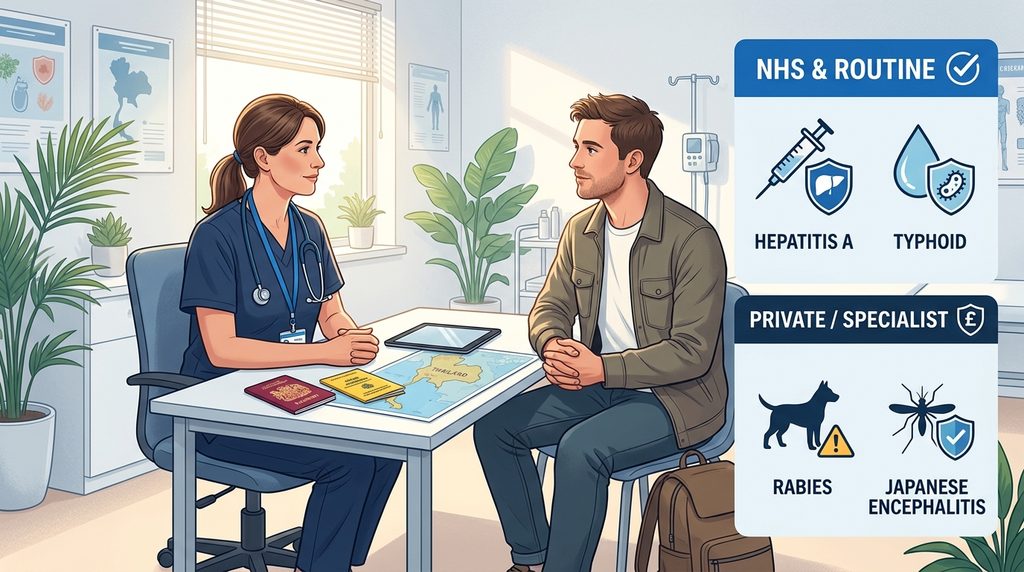
Many people search for what vaccinations do I need for Thailand NHS advice to understand what is covered for free. In the UK, routine vaccines on the NHS schedule are generally available at no cost through your GP surgery. Some travel vaccines are also offered free on the NHS, since they protect against diseases found in the UK too. Hepatitis A and typhoid vaccines are often available through your GP, though this can depend on your surgery and local policies.
Other travel vaccines, such as those for rabies or Japanese encephalitis, are usually not free on the NHS. These are often available at a private travel clinic instead, and you may need to pay a fee. The NHS website gives general guidance on travel health, but it also recommends checking with your GP or a travel clinic for advice specific to your trip. Since NHS policies and vaccine availability can change, it is wise to contact your GP surgery directly to confirm what they currently offer before your trip.
Commonly Recommended Vaccines for Thailand
Hepatitis A protects against a liver infection spread through contaminated food or water. This is one of the most frequently recommended vaccines for travel to Thailand, since the risk is higher than in the UK. Typhoid is another common recommendation, especially if you plan to eat street food or travel outside well-known tourist areas. Both vaccines are generally considered useful for most types of travel to Thailand, though a doctor can confirm if they suit your specific trip.
Other vaccines are considered based on your personal travel plans rather than for every visitor. Japanese encephalitis vaccine may be discussed if you plan to spend a long time in rural areas, especially near rice fields or farm animals. Rabies vaccine might be recommended if you plan to do outdoor activities where contact with animals is more likely. Hepatitis B is sometimes suggested for longer stays or certain types of work or volunteering. A travel health professional can help you decide which of these fit your actual travel plans, since not everyone needs every vaccine.
Timing Your Vaccinations Before Travel
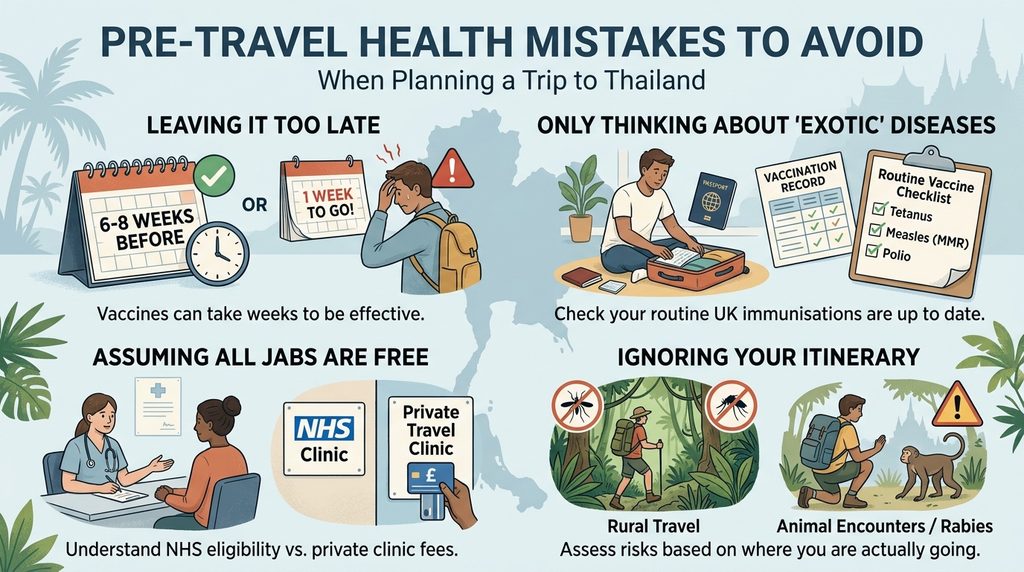
Timing matters a lot when planning your vaccines. Many vaccines need several weeks to become fully effective, and some require more than one dose spread out over time. This means booking a travel health appointment at the last minute can limit your options, since some vaccines will not have enough time to work before your flight. A good rule of thumb is to book an appointment at least four to six weeks before you travel, though earlier is often better for vaccines needing multiple doses.
If your trip comes up suddenly, do not assume vaccination is pointless. Even partial protection or late doses can sometimes still help, depending on the vaccine and your travel plans. A travel health nurse can advise on what is still worth doing, even with limited time before departure. Booking early also gives you time to handle any side effects well before your trip, rather than dealing with them while packing or travelling.
Common Mistakes Travellers Make
A common mistake is leaving vaccine appointments until the final week before travel. This can limit which vaccines are still useful, since many need time to take effect. Another mistake is assuming all travel vaccines are free on the NHS, when many require payment at a private clinic. Some travellers also forget to mention specific plans, like visiting rural areas or handling animals, which can change what vaccines a doctor recommends.
Another issue is relying only on general online advice instead of a proper appointment. Your personal health history, age, and planned activities all affect which vaccines suit you best. Skipping routine vaccines because you assume they are already covered is another common error worth avoiding. Think of travel vaccines like packing the right shoes for a hike. You would not wear sandals on a mountain trail, and you should not travel without checking which vaccines match your specific trip.
Other Health Precautions for Thailand
Vaccines are only one part of staying healthy during your trip. Food and water safety also matters a great deal in reducing your risk of illness. Many travellers get sick from contaminated water or undercooked food rather than from diseases a vaccine could prevent. Drinking bottled or properly treated water, and choosing food from clean, busy stalls, can lower your risk significantly.
Mosquito bite prevention is another important step, since vaccines do not cover every mosquito-borne illness. Using insect repellent, wearing long sleeves in the evening, and sleeping under mosquito nets where needed can all help. Travel insurance is also worth arranging before you leave, since it can cover unexpected medical costs abroad. Checking the latest travel health advice closer to your departure date helps you stay informed about any changes.
Frequently Asked Questions
Do I need a yellow fever vaccine for Thailand?
Thailand does not generally require proof of yellow fever vaccination for travellers arriving from most countries. However, this can depend on which countries you have recently visited before arriving. Always check current entry requirements with official sources before you travel.
Can I get travel vaccines at my local pharmacy?
Some pharmacies in the UK offer certain travel vaccines, though availability varies by location and provider. Not all pharmacies offer the same range of vaccines as a GP or travel clinic. It is best to check directly with your local pharmacy about what they currently provide.
How much do travel vaccines for Thailand cost?
Costs vary depending on the vaccine, the provider, and whether it is available free through the NHS. Vaccines not covered by the NHS are usually available at private travel clinics for a fee. Contact your GP surgery or a travel clinic directly for current pricing.
Is malaria a risk in Thailand?
Malaria risk in Thailand depends heavily on which areas you visit, since risk varies by region. There is no vaccine for malaria, so prevention often relies on anti-malaria tablets and mosquito bite prevention. A travel health professional can advise whether tablets are recommended for your specific destination.
What if I am pregnant and need travel vaccines?
Some travel vaccines may not be suitable during pregnancy, while others may still be recommended depending on your risk. This decision depends on your individual health and travel plans. Speak with your GP or a travel health specialist before booking any vaccines while pregnant.
Do children need different vaccines for Thailand?
Children may need a different vaccine schedule than adults, depending on their age and existing vaccination history. Some vaccines have age restrictions or different dosing for younger travellers. A GP or travel clinic can create a plan suited to your child’s age and health needs.
Final Thoughts
Figuring out what vaccinations do I need for Thailand does not have to feel overwhelming. The best approach is booking a travel health appointment early, ideally four to six weeks before you fly. A doctor or nurse can look at your personal travel plans and health history to recommend the right vaccines for you. Combining the right vaccines with good food, water, and mosquito bite habits gives you strong protection during your trip.
Every traveller’s situation is a little different, so there is no single checklist that fits everyone. Taking the time to get personal advice, rather than relying only on general information, helps you travel with more confidence. Thailand offers incredible experiences, and a little preparation goes a long way toward keeping your trip safe and enjoyable.
Disclaimer
This article is for general information only and was written with AI assistance. It does not replace professional medical advice from a doctor, nurse, or travel health specialist. Vaccine recommendations and NHS policies can change, and this guide may not cover every personal situation. Always check official sources, such as the NHS or a registered travel clinic, before making decisions about your health or travel vaccines.