
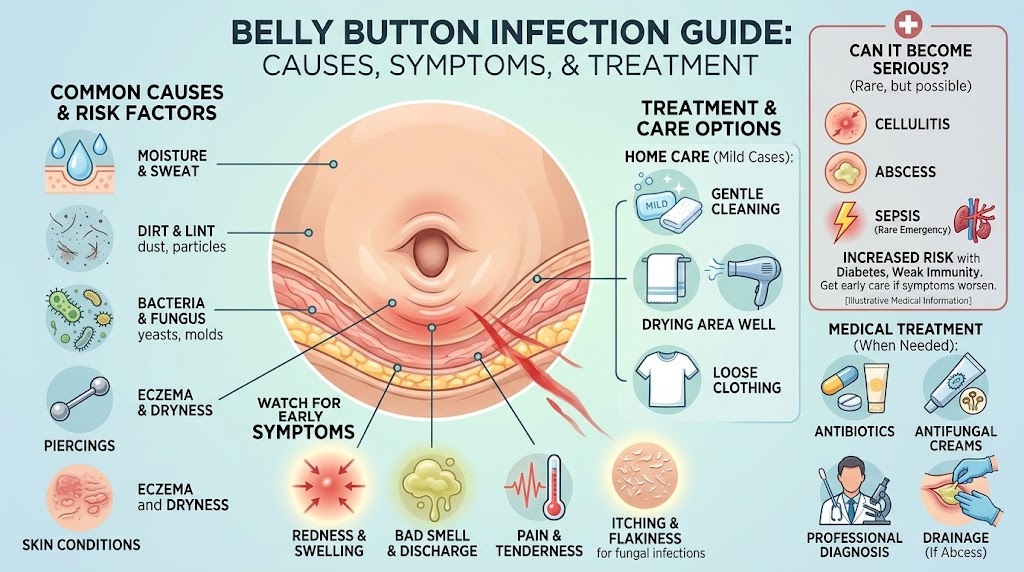
Can a Belly Button Infection Kill You? A belly button infection often feels like a small, annoying problem. You might notice redness, itching, swelling, or discharge around your navel. Most mild infections improve with proper care, but some can become serious if left untreated.
This guide explains what causes a belly button infection and how to recognise the symptoms early. You will learn when home care may be enough, when to seek medical help, and how an untreated infection could lead to serious complications. By understanding the warning signs, you can take the right steps to protect your health and know when professional treatment is necessary.
What Causes a Belly Button Infection
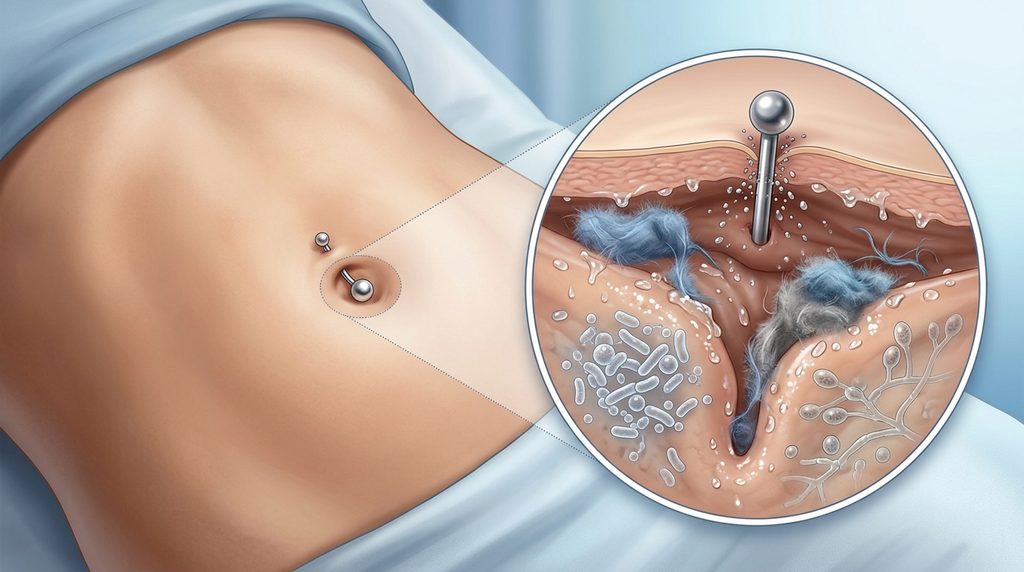
Your belly button has folds and small spaces where moisture, dirt, and bacteria can build up. This makes it easier for germs to grow, especially if the area stays damp for long periods. Sweat, lint, soap residue, or lack of regular cleaning can all raise the risk. People with piercings, recent surgery, or skin conditions like eczema may also face a higher chance of infection.
Bacteria are the most common cause, but fungal infections can happen too, especially in warm or humid conditions. A fungal infection often looks slightly different, with a dry, flaky texture instead of wet discharge. In some cases, an infected belly button piercing introduces bacteria directly into the skin, which can spread if not treated early. Knowing the cause helps you understand the right way to treat it, since bacterial and fungal infections do not respond to the same treatments.
Common Symptoms to Watch For
Spotting symptoms early can help prevent a minor issue from getting worse. Common signs include redness, swelling, warmth, and tenderness around the navel. You may also notice an unpleasant smell or discharge that looks yellow, green, or cloudy. Itching is common with fungal infections, while bacterial infections often cause more noticeable pain or sensitivity.
In some cases, you might feel generally unwell, which can be a signal that the infection is becoming more serious. Symptoms like fever, chills, or increasing swelling that spreads beyond the belly button area need quick attention. If the skin around your navel becomes hot to the touch or starts forming a hard lump, this could mean the infection is going deeper into the skin. Watching how symptoms change day by day is one of the easiest ways to catch problems before they grow.
Can a Belly Button Infection Kill You
This is the main concern many people have, and the honest answer is that it is rare, but not impossible in certain situations. Most belly button infections stay limited to the skin and clear up with proper care. However, if bacteria spread deeper into the body, it can lead to more serious conditions like cellulitis, abscesses, or in rare cases, sepsis. Sepsis is a dangerous reaction where the body’s response to infection harms its own tissues, and it needs emergency treatment.
People with weaker immune systems, diabetes, or other health conditions face a higher risk if an infection is left untreated. A healthy person with a mild infection is unlikely to face severe complications if they get timely care. Still, ignoring worsening symptoms for too long increases the risk of the infection spreading into the bloodstream. This is why doctors stress that even a small skin infection deserves attention if it does not improve within a few days.
How Doctors Diagnose the Problem
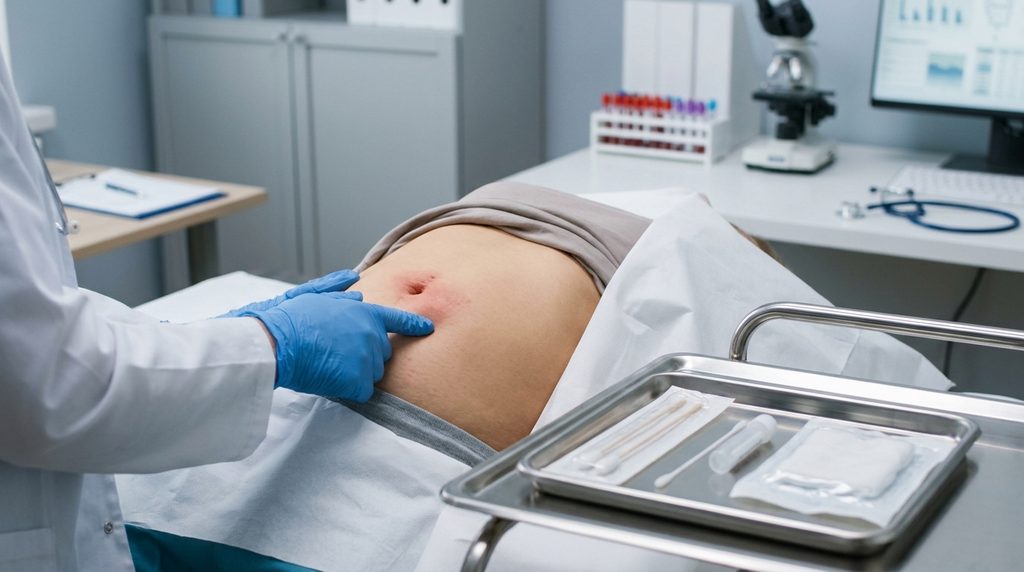
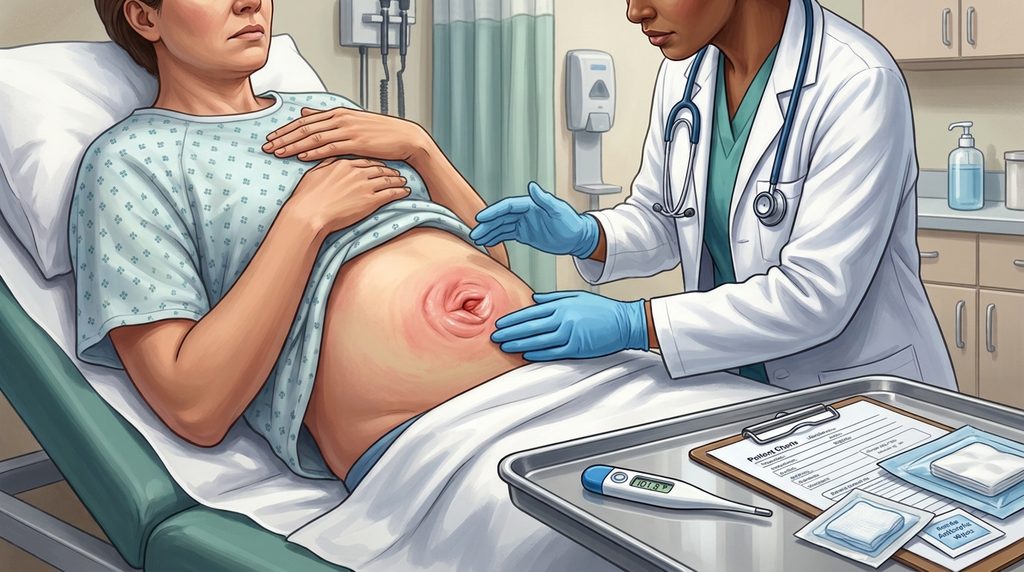
When you visit a doctor for a belly button infection, they will usually start by examining the area closely. They may ask about your symptoms, how long they have lasted, and whether you have any piercings, past surgeries, or skin conditions. In many cases, a visual exam is enough to tell if the infection is bacterial or fungal. If the infection looks severe or does not respond to basic treatment, the doctor might take a small swab sample to test for specific bacteria.
For infections that seem deeper or more serious, doctors may check for signs of swelling that spreads beyond the navel or test for fever and other symptoms linked to systemic infection. In some situations, blood tests help confirm whether an infection has spread further into the body. This step is especially common for people with existing health risks, since their infections may need a different treatment plan. Diagnosis early on makes treatment faster and reduces the chance of complications.
Effective Treatment Options
Treatment for a belly button infection usually depends on the cause. Bacterial infections often respond well to topical or oral antibiotics prescribed by a doctor. For mild infections, keeping the area clean and dry can be enough, along with gentle antiseptic washes. Fungal infections usually need antifungal creams, and these may take a bit longer to clear compared to bacterial infections.
If the infection comes from a piercing, removing or loosening the jewelry may help the area heal faster, though this should be guided by a professional. For more severe infections, doctors might drain a buildup of pus if an abscess has formed. This procedure should only be done by a medical provider, since trying to drain it yourself can push bacteria deeper into the skin. Following the full treatment plan, even after symptoms start improving, helps prevent the infection from returning.
Home Care Tips That Actually Help
Many people wonder what they can do at home before seeing a doctor. Gently cleaning the belly button with mild soap and water, then drying it fully, is one of the simplest steps you can take. Avoid scrubbing too hard, since this can irritate the skin further. Wearing loose clothing can also help keep the area dry and reduce friction that worsens symptoms.
Over-the-counter antiseptic solutions may help with very mild redness or irritation, but they are not a replacement for medical treatment if symptoms worsen. Avoid using strong chemicals, alcohol-based products, or essential oils directly on the wound, since these can cause more irritation. If your symptoms do not improve within two to three days of home care, it is best to speak with a doctor rather than waiting longer. Early action at home can support treatment, but it should never replace medical advice for infections that are spreading or becoming painful.
Common Mistakes People Make
One common mistake is ignoring symptoms because they seem minor at first. A little redness can quickly turn into a painful, swollen area if bacteria multiply unchecked. Another mistake is trying to pop or squeeze any visible bump, which can push infection deeper instead of releasing it safely. People sometimes also use harsh products, thinking stronger chemicals will heal the area faster, but this often damages healthy skin instead.
Another issue is stopping antibiotics early once symptoms improve. This can allow remaining bacteria to grow back, sometimes in a stronger form. People with piercings often forget to clean both the front and back of the jewelry, missing hidden buildup. [Add your own example or image here] A simple routine of gentle cleaning and careful monitoring avoids most of these common errors.
When to See a Doctor Immediately
While many belly button infections are manageable at home, certain warning signs mean you should seek medical care right away. If you notice a fever above 100.4°F, rapidly spreading redness, or severe pain, these are signs the infection may be getting worse. Pus that increases in amount, a strong foul smell, or red streaks moving away from the belly button are also serious signs that should not be ignored.
People with diabetes, autoimmune conditions, or weakened immune systems should be especially cautious, since infections can progress faster in these cases. If you feel unusually tired, dizzy, or confused along with belly button symptoms, this could point to a more serious systemic issue. It is always safer to get checked early rather than wait to see if things improve on their own. Quick action in these situations can prevent complications and support faster recovery.
Frequently Asked Questions
Can a belly button infection spread to other parts of the body?
Yes, if left untreated, bacteria can spread beyond the belly button into nearby skin or deeper tissue. In rare cases, it can enter the bloodstream, leading to more serious health problems. Early treatment greatly reduces this risk.
How long does a belly button infection usually take to heal?
Mild infections often improve within a few days to a week with proper care. Fungal infections may take longer, sometimes a few weeks, depending on how consistently treatment is followed. Severe infections may need longer recovery time under medical supervision.
Is it normal for a belly button infection to smell bad?
A noticeable odor can be a sign of bacterial buildup or infected discharge. While mild smell can happen with minor irritation, a strong or worsening odor usually means you should seek medical advice. This symptom should not be ignored for too long.
Can belly button piercings increase infection risk long after healing?
Yes, even healed piercings can become infected again if bacteria enter through small breaks in the skin. Regular cleaning and checking the area helps lower this risk. Any sudden swelling or pain around an older piercing should be checked by a professional.
Are belly button infections more common in certain people?
People with diabetes, weakened immune systems, or skin conditions face a higher risk of infection. Those with piercings or recent abdominal surgery may also be more prone to irritation and bacterial growth. Keeping the area clean plays a big role in prevention for everyone.
Can I use natural remedies to treat a belly button infection?
Some natural options, like diluted tea tree oil, are sometimes used for mild irritation, but they are not proven replacements for medical treatment. Using unverified remedies on a worsening infection can delay proper care. It is safer to consult a doctor for an accurate diagnosis and treatment plan.
Final Thoughts
A belly button infection is usually a minor issue that clears up with simple care and attention. Understanding the signs early can help you treat it before it becomes more serious. While it is rare for these infections to become life-threatening, ignoring worsening symptoms raises the risk of complications that are harder to treat later.
If you notice symptoms spreading, worsening pain, fever, or unusual tiredness, it is best to see a doctor rather than wait. Taking small steps like keeping the area clean, avoiding harsh products, and following treatment plans fully can make a big difference in how quickly you recover. Your health is worth the extra caution, especially when symptoms do not improve on their own.
Disclaimer
This article is for general information only and was written with AI assistance. It does not replace professional medical advice. Health information can change over time, and this guide may not cover every personal situation. Please check with a qualified doctor or trusted medical source for advice specific to your health.